

Department · Production
The production office runs the show that the floor shoots.
Production hires the crew, books the kit, moves the unit and spends the money, from the first day of prep to the last day of wrap.

Career ladder · 8 grades
Runner to Line producer
Errands, deliveries, phones, printing, the office kitchen.

Learning path · free · 12 films
AI for producers
Where AI saves time and money in development, prep and delivery, what it costs, and the consent, copyright, disclosure and union rules UK producers must follow. Last checked 11 November 2026.

Watch: Production
8 items 60 Film Production Roles & What They Each Do - Actor's GuideAugmented Actor · Lesson20 min.
 Screen careers: Line Producer & Production ManagerFfilm Cymru Wales · Careers
 What is a...Line Producer? | Careers in FilmReel Opportunities · Careers
 How do you get work as a runner, a researcher and an assistant producer (AP) in TV documentaries?ScreenSkills · Careers
 The Filmmaker's Army: Crash Course Film Production with Lily Gladstone #3CrashCourse · Lesson
 The Pre-Production Process in Film Explained [Stages of Filmmaking, Ep 2]StudioBinder · Lesson
 Master Series: What Productions Need to Know about the UK Tax ReliefEntertainment Partners · Lesson
 What Is a Line Producer? [The Key Role of Line Producers] #lineproducerStudioBinder · Lesson
Career ladder
From first job to head of department
Producers sit above the line producer. Accounts is its own ladder, not the top rung of the office.
Production office
-
Entry grade
Runner
Errands, deliveries, phones, printing, the office kitchen.Watch and read
-
 Step 2
Production assistantAlso: PA; often shares the runner's line on the card
Paperwork, phones and distribution in the office.Watch and read
-
Step 3 Production secretary Scripts, schedules, crew lists and the office diary out on time.
-
Step 4 Assistant production coordinatorAlso: APOC Travel, hotels, kit orders, the back page of the call sheet.
-
 Step 5
Production coordinator
Runs the office: crew, suppliers, movement, distribution.Watch and read
-
Step 6 Production supervisor The production manager's deputy on larger shows.
-
Step 7
Production manager
The schedule, the budget, crew deals and safety on the unit.Watch and read
-
Top of the ladder
Line producer
Delivers the production on budget and to schedule.Watch and read
Specialists branch off the ladder at the grade shown; they aren't steps on it
- Travel coordinatorbeside Assistant production coordinatorMoves cast and crew: flights, hotels, visas.
- Producer's or director's assistantbeside Production secretaryDiary, calls and paperwork for one person.
Production accounts
Parallel ladder-
Entry grade Accounts trainee Filing, data entry, petty cash floats and receipts.
-
Step 2 Assistant accountant Purchase orders, invoices, petty cash and supplier payments.
-
Step 3 First assistant accountant Runs the ledgers and the weekly cost report for the accountant.
-
 Step 4
Production accountant
Runs the accounts team, the cost report and payroll.Watch and read
-
Top of the ladder Financial controller Oversees the money across a large show or a slate (common practice).
Grade by grade: what you need before moving up
| Grade | What you do | Before moving up |
|---|---|---|
| Runner | Errands, deliveries, phones, printing, the office kitchen. | Reliability, a clean driving licence, a credit or two. |
| Production assistantAlso: PA; often shares the runner's line on the card | Paperwork, phones and distribution in the office. | Knowing every department's paperwork. |
| Production secretary | Scripts, schedules, crew lists and the office diary out on time. | Fast, accurate paperwork and knowing every department. |
| Assistant production coordinatorAlso: APOC | Travel, hotels, kit orders, the back page of the call sheet. | Running whole areas without being checked. |
| Production coordinator | Runs the office: crew, suppliers, movement, distribution. | Several credits as APOC; budgets and cost reports start to make sense. |
| Production supervisor | The production manager's deputy on larger shows. | Hiring, deals and the cost of each decision. |
| Production manager | The schedule, the budget, crew deals and safety on the unit. | Credits as coordinator or supervisor; command of the budget. |
| Line producer | Delivers the production on budget and to schedule. | Production management credits at the scale of the show. |
| Grade | What you do |
|---|---|
| Accounts trainee | Filing, data entry, petty cash floats and receipts. |
| Assistant accountant | Purchase orders, invoices, petty cash and supplier payments. |
| First assistant accountant | Runs the ledgers and the weekly cost report for the accountant. |
| Production accountant | Runs the accounts team, the cost report and payroll. |
| Financial controller | Oversees the money across a large show or a slate (common practice). |
Bectu scripted production card, 2026–27 · Every department's ladder: Careers A–Z · Getting work · Working freelance
Learn it, step by step
9 paths- Production · New to set to working crewAI for producers12 lessons · about 8 hours · freeStart path
 Production · New to set to working crewRights, consent and disclosure11 lessons · about 3 hours · freeStart path
 Production · New to set to working crewDirecting13 lessons · about 4 hours · freeStart path
 Production · New to set to working crewDirecting actors15 lessons · about 3.5 hours · freeStart path
 Production · New to set to working crewProducing and development10 lessons · about 7 hours · freeStart path
 Production · New to set to working crewBudgeting12 lessons · about 4 hours · freeStart path
 Production · New to set to stepping upThe production office12 lessons · about 3.5 hours · freeStart path
 Editorial and post · New to set to working crewAI tools in film and TV production18 lessons · about 3 hours; refreshed monthly · freeStart path
 Health and safety · New to setYour first day on set19 lessons · about 3 hours · freeStart path
Safety first
The producer's duty, hours and the office
In law the producer is the employer, so safety starts in the production office: the risk assessment, competent advice, insurance, hours and welfare. Office crew carry a lot of it.
Watch first
- 17:44Introduction to Health and Safety in Film and TelevisionXpoNorth Digital · 17:44
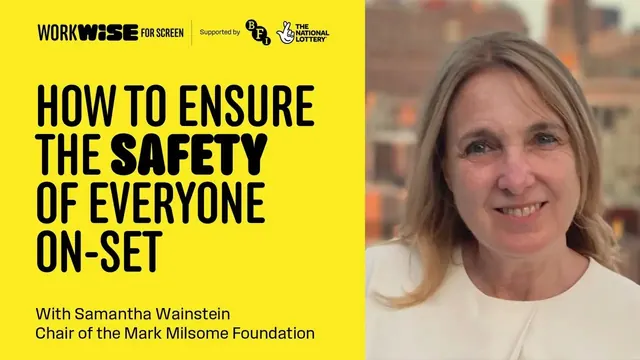 23:38Why on-set safety and speaking up is our collective responsibilityWorkWise for Screen · 23:38
 3:48Tips to increase mental health on setThe Film and TV Charity · 3:48
The hazards
7What hurts people in this department on UK sets, and what keeps them safe.
- The risk assessmentThe producer must assess the risks of the shoot and act on them. In practice the production manager pulls it together with a health and safety adviser and each HoD. It's a live document: when the schedule or a location changes, so does the assessment.
- Competent peopleHazardous work (stunts, SFX, armoury, water, aerial, animals, rigging) is done only by people competent to do it. The office books and checks them: the register, the licence, the insurance, the ticket.
- Hours and fatigueLong days and short turnarounds cause mistakes on set and crashes on the drive home. The office plans the schedule, tracks overtime and books rooms or drivers when a day overruns.
- WelfareToilets, water, shelter, hot food and somewhere warm are the production's job, on every location. Plan them before the recce report is signed off.
- Children and vulnerable peopleChild performers need a local authority licence and a licensed chaperone. Anyone working with children may need a DBS check. The office tracks licences and hours.
- Bullying and harassmentThe production sets the tone: a clear policy, a named person to go to and a route to report outside the production (CIISA). A complaint gets dealt with, not moved on.
- Accidents and RIDDOREvery accident goes in the accident book. The production reports serious injuries and dangerous occurrences to the HSE under RIDDOR. The office makes sure it happens.
Who is responsible
- The producer, as employer, owns the risk assessment and must use competent advice.
- The production manager makes it work: bookings, checks, schedule, welfare.
- Coordinators and secretaries keep the paperwork live: licences, call sheets, the accident book.
- Every HoD assesses their own department's work and tells the office when it changes.
As a trainee, never
- Never book a stunt, SFX, armoury or specialist crew member without checking their register, licence or ticket.
- Never push a call sheet out with a hazard missing because the paperwork isn't finished.
- Never sit on a bullying or safety complaint. Pass it up the same day.
Anyone can say stop. If something feels wrong, say so to your head of department or the 1st AD.
Where this comes from
- HSE: theatre, film and TVThe Health and Safety Executive's guidance for screen and stage.
- HSE: managing risks and risk assessmentThe employer's duty to assess risk (Management of Health and Safety at Work Regulations 1999).
- HSE: RIDDORWhich injuries and dangerous occurrences the production must report.
- GOV.UK: maximum weekly working hoursThe 48-hour average, opting out and rest breaks (Working Time Regulations 1998).
- The Children (Performances and Activities) (England) Regulations 2014Licences, chaperones, hours and breaks. Scotland, Wales and Northern Ireland have their own rules.
- Bectu: Eyes Half ShutThe union's campaign on long hours and fatigue in film and TV.
- CIISAThe Creative Industries Independent Standards Authority: report bullying and harassment.
- The Whole Picture ToolkitThe Film and TV Charity's mental health toolkit for productions.
Checked 13 November 2026. This is awareness, not a safety qualification: follow your production's risk assessment and your head of department.
AI in film and TV
How AI fits this department
Producers use AI for breakdowns, scheduling drafts, pitch material and localisation. UK commissioners expect AI use to be disclosed, and faces and voices need written consent.
Learning path: AI for producers The AI channel Consent and credit
Production, in detail
What production does
The production office is the unit's back office and switchboard. It opens in prep, usually weeks before the shoot, and closes after wrap once the last invoice is paid.
- Crew and contracts. Start paperwork, deal memos, timesheets and right-to-work checks.
- Kit and suppliers. Purchase orders, hire agreements, deliveries and returns.
- Movement. Travel, hotels, unit transport and the movement order.
- Paperwork. Scripts and their revisions, the cast list, the crew list and the daily progress report.
- Money. The accounts team pays crew and suppliers and reports the cost against the budget each week.
The floor answers to the 1st AD. The office answers to the production manager, who answers to the line producer and the producers.
Who production works with
Everyone. The production manager works closely with the 1st AD on the schedule, with locations on permissions and unit base, with transport on movement, and with every head of department on their crew and their budget line.
Kit and vocabulary
- Call sheet: the next day's plan, produced by the 2nd AD and signed off by the production manager.
- Movement order: directions, maps and parking for each location.
- Daily progress report (DPR): what was shot, when, by whom, and what went wrong.
- Purchase order (PO): the approval to spend before the invoice arrives.
- Cost report: the weekly picture of spend against budget, from accounts.
- Prep, shoot, wrap: the three phases of a production, each with its own office rhythm.
- Crew list: names, grades, phone numbers. Keep it private.
How to get in
Most people start as a runner or production assistant on a feature or HETV office. Some come from an office or events job, which is good preparation. Accounts entrants often come from bookkeeping or an accountancy course. The Production Guild runs step-up training for production and accounts grades.
Pay: Bectu scripted production card, 2026–27, which covers the office and accounts grades.
Where Futures in Film helps
Our production office course (dates soon: register interest) works through a call sheet, a movement order, a DPR, a stripboard breakdown and a petty cash reconciliation. On a production simulation week you hold an office grade through prep, shoot and wrap. If you have never been on a set, start with Your first day on set.
Who to know: Production
 BFC Skills and Social Responsibility Directory Searchable directory of UK organisations running screen training, skills and inclusion schemes.
 ScreenSkills job profiles Profiles of hundreds of screen jobs: what each role does and how to get in.
 ScreenSkills Select ScreenSkills' endorsement of university and college courses that are relevant to industry.
 6ft From the Spotlight Wellbeing and welfare support for UK productions and crew.
 BEAU (Broadcasting, Entertainment and Arts Unions) Brings together Bectu, Equity, the Musicians' Union and the Writers' Guild; formerly FEU and FEU Training.
 Bectu branches Bectu's craft and regional branches (camera, grips, costume and wardrobe, hair and make-up, art department and more) represent each grade.
 Pact Trade body for independent producers; runs training and diversity schemes.
 Production Managers' Association (PMA) Association for production managers and line producers in film and TV.
 The Production Guild Members' community for production talent (managers, coordinators, accountants and more): jobs, training, masterclasses and networking.

Other departments
17 departments Camera, 1187 films
 Lighting, 252 films
 Grip, 147 films
 Sound, 214 films
 Virtual production New, 118 films
 AI tools New, 83 films
 Art department, 149 films
 Costume, 94 films
 Hair and make-up, 54 films
 Assistant directors, 54 films
 Locations, 84 films
 Script supervision, 108 films
 Editorial and post, 469 films
 VFX, 218 films
 SFX, 20 films
 Stunts, 32 films
 Health and safety, 73 films
Read for production
6The magazines and books people in production read. Borrow the books free from a library.
- Some free; subscriptionBroadcastThe UK TV trade weekly: commissions, indies, people moves, the Hot 100 and a section for freelancers.UKRead Broadcast
- Some free; subscriptionScreen InternationalThe UK-based film trade: production, funding, festivals and Screen's Stars of Tomorrow.UK and internationalRead Screen International
 Free onlineTelevisualBusiness magazine for the UK broadcast and production community, strong on post and kit.UKRead Televisual
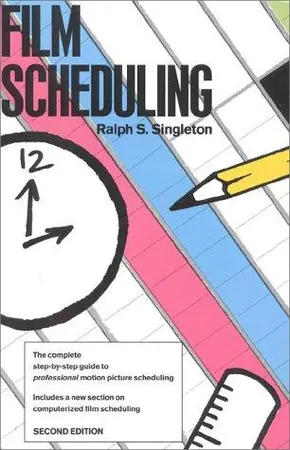 Film SchedulingRalph S. SingletonBreaking down a script and building the schedule, the AD's core skill.Look it up Film Scheduling (opens Open Library)
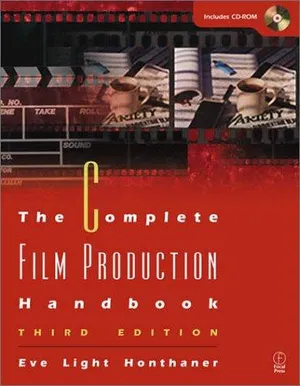 The Complete Film Production HandbookEve Light HonthanerForms, paperwork and procedures for the production office and the AD team. US practice.Look it up The Complete Film Production Handbook (opens Open Library)
 The Guerilla Film Makers HandbookChris Jones and Genevieve JolliffeMaking a low-budget feature in the UK, from finance to festivals.Look it up The Guerilla Film Makers Handbook (opens Open Library)
All resources and reading: trade press, directories, libraries and more
Events for production
19Shows, festivals and careers days where production crew go to learn and meet people. Dates checked on each organiser's site.
-
Leeds International Film FestivalOver two weeks of films, and the guests who made them.Venues across Leeds
Tickets and LIFF passesGo to the event site : Leeds International Film Festival -
Inter Faith WeekLook for screenings and talks near you, or put one on with your crew.Local events around the UK
Most events freeGo to the event site : Inter Faith Week -
Production Futures ON TOURLighting and sound skills carry straight from live events into film and TV.Production Park, Wakefield
Free to registerGo to the event site : Production Futures ON TOUR -
FOCUSMeet the film offices and studios that decide where productions shoot.Business Design Centre, London
Apply for a delegate badgeGo to the event site : FOCUS -
Glasgow Film FestivalScotland's big festival, with guests from every department.Glasgow Film Theatre and venues across the city
Tickets per screeningGo to the event site : Glasgow Film Festival -
BFI FlareTwelve days of new work and the people who made it.BFI Southbank, London
Tickets per screeningGo to the event site : BFI Flare -
NAB ShowNew cameras and post tools are launched here each spring.Las Vegas
Paid registrationGo to the event site : NAB Show -
Flatpack FestivalThe Midlands' film festival: meet the region's filmmakers.Venues across Birmingham
Tickets per eventGo to the event site : Flatpack Festival -

Free; book a sessionGo to the event site : Pinewood Futures Festival -
Dates announced through the yearRTS Futures FestivalTV companies come to you: ask how they hire runners and trainees.Venues around the UK
Free; book a placeGo to the event site : RTS Futures Festival -
Dates usually announced for OctoberNFTS open daysSee the stages and kit, and ask current students what the course is really like.NFTS campus and online
Book through the NFTSGo to the event site : NFTS open days -
Dates usually announced for SeptemberFilm & TV Job FairFace-to-face with recruiters, and a free CV check while you are there.Byron Hall, Harrow, London
Tickets on EventbriteGo to the event site : Film & TV Job Fair -
Dates usually announced for OctoberBFI London Film FestivalQ&As with the crews behind the year's biggest films.BFI Southbank and cinemas across London
Tickets per screeningGo to the event site : BFI London Film Festival -
Dates usually announced for AugustEdinburgh International Film FestivalRuns alongside the Fringe: a week of new films and filmmakers.Cinemas across Edinburgh
Tickets, passes and industry accreditationGo to the event site : Edinburgh International Film Festival -
Dates usually announced for SeptemberEncounters Film FestivalShort films are how most directors and crews get seen first.Bristol harbourside
Tickets and passesGo to the event site : Encounters Film Festival -
Dates usually announced for OctoberInternational Motor Film Awards and Trade ExpoWhere vehicle-rigging, tracking vehicle and camera car crews meet.Alexandra Palace, London
Free to register for the expoGo to the event site : International Motor Film Awards and Trade Expo -
Dates usually announced for FebruaryBFI Future Film FestivalBuilt for people starting out: talks on how to get the first job.BFI Southbank, online and UK-wide
See the BFI siteGo to the event site : BFI Future Film Festival -
Dates usually announced for JanuaryLondon Short Film FestivalSee the short films that launch new directors and crews.Cinemas across London
Tickets per screeningGo to the event site : London Short Film Festival -
Dates usually announced for OctoberIris Prize FestivalWales' festival with an industry day built for meeting people.Cardiff
Festival tickets; Industry Day passGo to the event site : Iris Prize Festival

Last reviewed 9 November 2026