
Department guide · Safety
Who answers for safety on a unit, and the people who help them.
Safety is the producer's legal duty; the health and safety adviser and the unit medic help the production carry it out.
Learning path · free · 19 films
Your first day on set
Everything a new runner or trainee needs before a first UK shoot: who's who, how the day runs, radio and slate calls, call sheets, safety, wellbeing, and finding and keeping freelance work.
Watch: Health, safety and medical
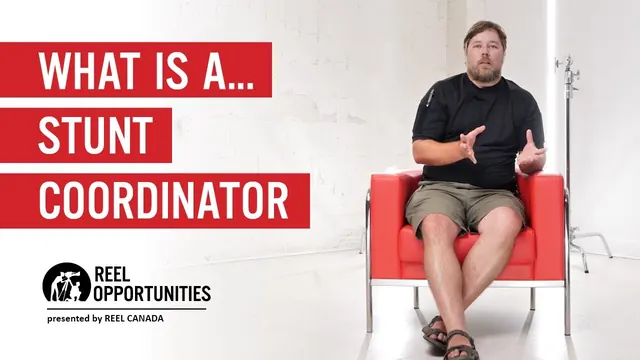
Watch · 1:52
What is a... Stunt Coordinator? | Careers in Film
Reel Opportunities · original on YouTube
Career ladder
From first job to head of department
Two separate professions, not one ladder. Both are hired by production and usually come from an existing profession. Not Bectu grades; common practice.
Medical
-
Entry grade First responderAlso: e.g. FREC 3 First aid cover on smaller shoots and crowd days.
-
 Step 2
Unit medicAlso: set medic
Medical cover for the unit, call to wrap.Watch and read
-
Top of the ladder Lead medicAlso: medical coordinator Medical cover across a large production.
Health and safety
Parallel ladder-
Entry grade Assistant health and safety adviser Inductions, checks and paperwork for an adviser.
-
 Step 2
Health and safety adviser
Advises the production on risk and compliance.Watch and read
-
Top of the ladder Production safety managerAlso: senior adviser Safety across a slate or a studio.
Grade by grade: what you need before moving up
| Grade | What you do | Before moving up |
|---|---|---|
| First responderAlso: e.g. FREC 3 | First aid cover on smaller shoots and crowd days. | Experience in events or pre-hospital care. |
| Unit medicAlso: set medic | Medical cover for the unit, call to wrap. | Registration as a paramedic (HCPC) or nurse (NMC), or advanced first response. |
| Lead medicAlso: medical coordinator | Medical cover across a large production. | Several productions as unit medic. |
| Grade | What you do | Before moving up |
|---|---|---|
| Assistant health and safety adviser | Inductions, checks and paperwork for an adviser. | A recognised safety qualification. |
| Health and safety adviser | Advises the production on risk and compliance. | Industry experience and professional membership, such as IOSH. |
| Production safety managerAlso: senior adviser | Safety across a slate or a studio. | Chartered status and years of production experience. |
HSE: theatre, film, TV and broadcasting · Every department's ladder: Careers A–Z · Getting work · Working freelance
Learn it, step by step
4 paths- Health and safety · New to setYour first day on set19 lessons · about 3 hours · freeStart path
- Health and safety · New to setStunts, SFX and armoury: awareness for everyone on set19 lessons · about 4.5 hours · freeStart path
 Learning path · step-up → proStep up: your first time as HoD or supervisor18 lessons · about 6 hours · freeStart path
 Production · New to set to working crewProducing and development10 lessons · about 7 hours · freeStart path
Safety first
Health, safety and speaking up
Everyone on a unit has a duty to work safely and to speak up. The safety adviser and the medic help the producer meet the legal duty. Here's what every new starter needs to know before day one.
Watch first
Module 1 of Your first day on set. Mark them done there to track your progress.
- 17:44Introduction to Health and Safety in Film and TelevisionXpoNorth Digital · 17:44
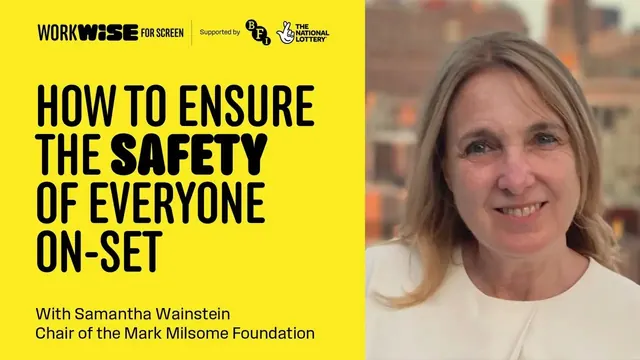 23:38Why on-set safety and speaking up is our collective responsibilityWorkWise for Screen · 23:38
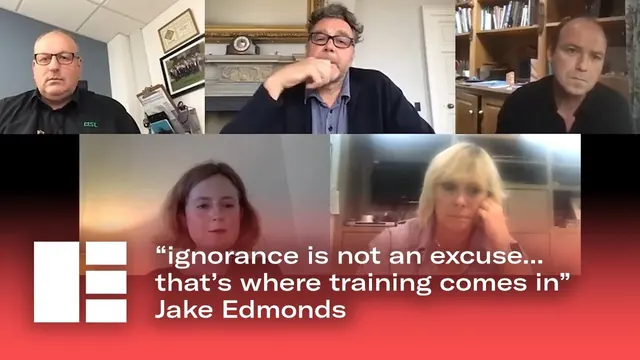 13:52Keeping Our Sets Safe: The Health & Safety DebateThe TV Festival · 13:52
The hazards
7What hurts people in this department on UK sets, and what keeps them safe.
- The briefingListen to every safety briefing. It tells you the hazards, where to stand and who's in charge. Missed it? Say so.
- Trips, slips and cablesThe commonest accidents. Watch your feet, keep walkways clear, ramp cables.
- Lifting and carryingKit is heavy. Lift with your legs, ask for help, use trolleys.
- Height and overheadNever work at height without training. Never stand under a load being lifted.
- Hours and fatigueLong days lead to mistakes and car crashes. Know the 48-hour average and your rest breaks, and say if you're too tired to drive.
- Mental health and bullyingLong hours, pressure and bad behaviour hurt people. You can report bullying and harassment, and get free support any time.
- Accidents and near missesReport every accident and near miss to your HoD and the medic. It goes in the accident book.
Who is responsible
- The producer, as employer, is responsible in law.
- The health and safety adviser advises and checks.
- The unit medic gives first aid and keeps records.
- Everyone has a duty to work safely and to speak up.
As a trainee, never
- Never ignore a hazard because someone senior walked past it.
- Never work at height or with machinery you haven't been trained on.
- Never keep an accident or near miss to yourself.
Anyone can say stop. If something feels wrong, say so to your head of department or the 1st AD.
Where this comes from
- HSE: theatre, film and TVThe Health and Safety Executive's guidance for screen and stage.
- HSE: RIDDORWhich injuries and dangerous occurrences the production must report.
- GOV.UK: maximum weekly working hoursThe 48-hour average, opting out and rest breaks (Working Time Regulations 1998).
- HSE: stress and mental health at workThe HSE Management Standards for work-related stress.
- ScreenSkills: film and TV online safety passportThe industry's online set-safety awareness course for crew.
- The Film and TV Charity: get supportFree 24-hour Support Line on 0800 054 0000.
- CIISAThe Creative Industries Independent Standards Authority: report bullying and harassment.
Checked 13 November 2026. This is awareness, not a safety qualification: follow your production's risk assessment and your head of department.
Health, safety and medical, in detail
What it does on a UK unit
Health and safety law applies to every UK production, paid or unpaid. The employer, usually the production company, holds the legal duty, and the HSE is clear it can't be delegated.
Day to day the producer is responsible and the 1st AD runs safety on the floor. HoDs answer for their own crews and kit.
Productions bring in two kinds of specialist to help:
- A health and safety adviser. The HSE suggests one for complex, hazardous or specialist productions. They review risk assessments, visit locations, advise on stunts, SFX, water, heights and vehicles, and help set up the safety system. They advise; they don't take over the producer's duty.
- A unit medic. Employers must provide adequate first aid, based on a first aid needs assessment (Health and Safety (First-Aid) Regulations 1981). On drama that usually means a medic on the unit, and extra cover on stunt, SFX and water days.
Who it works with
- Producer and production manager: the safety system, the budget and the decisions.
- 1st AD: the safety briefings and the order of work on the floor.
- Stunt coordinator and SFX supervisor: risk assessments for hazardous action.
- Locations and construction: recces, set builds under the CDM Regulations 2015, and welfare.
- Every crew member: reporting injuries, near misses and anything that looks wrong.
Kit and vocabulary
| Term | What it means |
|---|---|
| Risk assessment | Identifying hazards, who could be harmed and how the risk is controlled |
| RAMS | Risk assessment and method statement, often written by a specialist department |
| Dynamic risk assessment | Reassessing as conditions change on the day |
| First aid needs assessment | The employer's assessment of what first aid cover is needed |
| RIDDOR | The rules for reporting serious injuries and incidents to the enforcing authority |
| CDM 2015 | The construction regulations that apply to set builds |
| Near miss | An event that could have caused harm but didn't; report it |
How to get in
You come to both jobs from another career. Medics come from the ambulance service, nursing, the forces or event medicine. Safety advisers come from health and safety practice, often in construction, events or broadcasting, or from production roles followed by safety qualifications. Every new entrant, in any department, should know the basics: the Mark Milsome Foundation's online PSA1 production safety awareness course is a good start.
Pay
There is no Bectu rate card for medics or safety advisers. Medics and advisers are usually booked through specialist companies, and rates are agreed with the production.
Where Futures in Film helps
- Your first day on set: includes how a risk assessment reaches you and what to do when something looks wrong.
- Running a department: the safety you sign for as a head of department.
- How a set works: the 1st AD, the call sheet and the nearest hospital line.
Who to know: Health, safety and medical
 BFC Skills and Social Responsibility Directory Searchable directory of UK organisations running screen training, skills and inclusion schemes.
 ScreenSkills job profiles Profiles of hundreds of screen jobs: what each role does and how to get in.
 ScreenSkills Select ScreenSkills' endorsement of university and college courses that are relevant to industry.
 6ft From the Spotlight Wellbeing and welfare support for UK productions and crew.
 BEAU (Broadcasting, Entertainment and Arts Unions) Brings together Bectu, Equity, the Musicians' Union and the Writers' Guild; formerly FEU and FEU Training.
 Bectu branches Bectu's craft and regional branches (camera, grips, costume and wardrobe, hair and make-up, art department and more) represent each grade.
Other departments
17 departments Camera, 1187 films
 Lighting, 252 films
 Grip, 147 films
 Sound, 214 films
 Virtual production New, 118 films
 AI tools New, 83 films
 Art department, 149 films
 Costume, 94 films
 Hair and make-up, 54 films
 Assistant directors, 54 films
 Production, 654 films
 Locations, 84 films
 Script supervision, 108 films
 Editorial and post, 469 films
 VFX, 218 films
 SFX, 20 films
 Stunts, 32 films
Where we come in
Hold a health, safety and medical grade on a crewed unit.
Next for Health, safety and medical
Last reviewed 9 November 2026