Learning path · Craft and technology
AI tools in film and TV production
What AI is changing in UK film and TV now (November 2026), the main script, post, generative and voice tools, and where consent, copyright and the unions draw the lines. Last checked 11 November 2026.
Free films in teaching order, for one craft. Watch, tick them off and test yourself. It's practice that prepares you for an Academy course. This one prepares you for AI tools Foundation.
Lesson 1
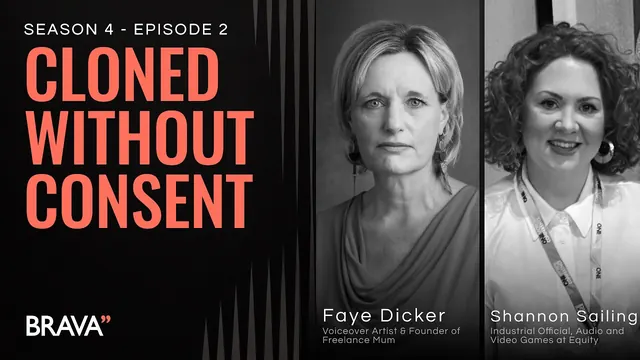
Cloned Without Consent, with Voice Actor Faye Dicker and Equity's Shannon Sailing
BRAVA · 40:13 · original on YouTube
You will learn: Know what happens when a voice is cloned without consent, and what Equity advises.
Watch for: UK voices (Equity). Listen for consent, control and payment.
Safety first
Consent, likeness, data and rights
AI tools don't drop things on people, but they can harm them: copying a face or voice without consent, leaking a script, breaking data protection law, or putting someone else's copyright in your film. These are the rules to follow before you open a tool on a production.
The hazards
- Faces, bodies and voicesA person's likeness and voice are theirs. Get informed, written consent for each use, paid where it's work. Equity's AI toolkit and its 'Stop AI Stealing the Show' campaign set out what performers expect.
- Personal dataCast and crew details, faces and voices are personal data under UK GDPR; face and voice data used to recognise someone is special category data. Don't upload them to a tool unless the production has checked it and has a lawful basis (ICO guidance).
- Confidential materialScripts, schedules and rushes are covered by contracts and NDAs. Some tools keep or train on what you upload. Use only tools and settings the production has approved.
- CopyrightOutputs can copy other people's work, and the law on training and ownership is still being decided in the UK (the government consulted on copyright and AI in 2024 to 2025). Check what the commissioner allows, and keep a record of the tools and prompts used.
- DeepfakesSharing a sexually explicit deepfake of a real person without consent is a criminal offence in England and Wales under the Online Safety Act 2023. Never make or share one, even as a joke.
- Disclosure and jobsBroadcasters and commissioners ask what was made with AI: tell them. Bectu, Equity and the Writers' Guild all have guidance; read your union's before you use AI on someone else's work.
Who is responsible
- The producer decides which tools are approved, and is responsible for rights and data on the production.
- Whoever uses a tool checks consent, data and rights before they upload anything.
- Performers decide what happens to their face, body and voice.
As a trainee, never
- Never clone, alter or generate a real person's face or voice without their written consent.
- Never upload scripts, rushes or crew data to an unapproved tool.
- Never make or share a deepfake of a real person.
Anyone can say stop. If something feels wrong, say so to your head of department or the 1st AD.
Where this comes from
- Equity AI toolkitAdvice on digital likeness scanning, voice capture and generative AI.
- Equity: Stop AI Stealing the ShowThe union's campaign for personality rights over voice, face and body.
- ICO: artificial intelligenceThe Information Commissioner's guidance on AI and UK GDPR.
- ICO: biometric data guidanceWhen face and voice data used to recognise someone is special category data.
- GOV.UK: copyright and artificial intelligence consultationThe UK government's consultation; check for the latest position before relying on it.
- Online Safety Act 2023Including the offence of sharing intimate deepfakes.
- Bectu and the Writers' Guild of Great Britain: AI guidanceThe crew and writers' unions' positions on AI at work.
Checked 13 November 2026. This is awareness, not a safety qualification: follow your production's risk assessment and your head of department.
By the end you will be able to
- Use AI features in DaVinci Resolve, Premiere Pro, Topaz and Runway on real footage
- Plan a generative-video or AI dubbing workflow and know its limits and costs
- Explain the Equity, Bectu and WGGB positions, consent for voice and likeness, and how to label AI-made media
Test yourself
Could you do it on a set?
4 real situations, one for each thing this path teaches. It's optional practice, not pass or fail, and your answers stay on this device.
Next: do it for real
This path prepares you for AI tools Foundation.
Rules before tools, then AI in pre-production, the edit, VFX and clean-up, sound, generative video, and rights and disclosure. Optional practice task: one real clip through transcript search, clean-up and a mask, logged and labelled.
It's free and open in the pilot. Finish it to book a competency check, then a practical on our unit.
How learning with FIF works
Learning path. Free films in teaching order, for one craft. Watch, tick them off and test yourself. It's practice that prepares you for an Academy course.
- Learn onlineFree films, paths and Academy coursesYou are here
- Competency checkA short check with us, online or in person
- In-person practicalOn our unit at Pinewood or 3 Mills
- FIF CertificateFrom the practical only
The FIF Certificate comes only from the practical. How it works · Book a competency check
 CoSTAR Foresight Lab Webinar: Creative work in the age of AI: Tools, practice and the road aheadCoSTAR Network · Lesson1 h 27 min.
 AI Agent for Pre-Production | Script Breakdown, VFX & Scheduling OptimizationFilmustage · Lesson46 min.
 A Guide to Generative Extend in Premiere Pro (beta) | Adobe Video x @filmriotAdobe Video · Lesson5 min.
 How to Enhance Live Action Footage with AI | RunwayRunway · Lesson4 min.
 How to Use Descript: Beginner’s Guide to Video Editing with Text & AIDescript · Lesson4 min.
 The New Cinematic AI Film Workflow (What Actually Works)Theoretically Media · Lesson18 min.
 Create & Animate a 3D Character | Autodesk Flow StudioAutodesk Media & Entertainment · Lesson4 min.
 Introducing Act-Two | How to Use Video in Act-Two Runway AI Facial Performance Capture for ActorsSolomon Jagwe · Lesson7 min.
 UK AI Law and How to Protect Your Voice with Dr Mathilde PavisBRAVA · Lesson59 min.
 Public Talk: Archival Producers Alliance (APA): Best Practices for Use of GenAI in DocumentariesMIT Open Documentary Lab · Lesson1 h 25 min.
 Digital Replicas, Deepfakes & Synthetic HumansSAG-AFTRA · Lesson6 min.
Go further
Beyond YouTube, labelled honestly. Free first. Paid options are labelled.
- AI in Film and Television: Creative Opportunities and Ethical Realities Paid (£150)
NFTS. Two-day course balancing tools and ethics. - AI for Screen Creatives: Practical Workflows, Rights and Creative Control Paid (£295)
NFTS. One-day practical course. - AI for Film and TV Production: From Concept to Platform Paid (£400)
NFTS. Two-day course. - AI for Film and TV: Tools, Protocols and Practices Paid (£5,000; some funded places)
NFTS. Longer professional programme. - Generative AI for Everyone Free to audit; certificate paid
Coursera (DeepLearning.AI). Plain-English grounding in how generative AI works. - Elements of AI Free
University of Helsinki. Free non-technical AI course with certificate. - Runway Academy Free (tool itself is paid)
Runway. Official tutorials for Runway's video tools. - DaVinci Resolve training (official books, videos and certification) Free
Blackmagic Design. Official free guides and lesson media for edit, colour, Fusion and Fairlight; certification exams are optional. - Writers' Guild of Great Britain Free resources
WGGB. Writers' union position and guidance on AI. - Equity Free to browse
Equity. Performers' union guidance on AI, consent and digital likeness.
For learners and trainers
Every lesson is a free video by its original maker, played from YouTube with privacy-enhanced settings. Found a broken video? Email [email protected].