
Learning path · Getting in
Your first day on set
Everything a new runner or trainee needs before a first UK shoot: who's who, how the day runs, radio and slate calls, call sheets, safety, wellbeing, and finding and keeping freelance work.
Free films in teaching order, for one craft. Watch, tick them off and test yourself. It's practice that prepares you for an Academy course. This one prepares you for Day One: ready for set.

Lesson 1
Introduction to Health and Safety in Film and Television
XpoNorth Digital · 17:44 · original on YouTube
You will learn: Know the basics of UK health and safety law and risk assessment for film and TV.
Note: UK practice; check current HSE guidance.
Safety first
Health, safety and speaking up
Everyone on a unit has a duty to work safely and to speak up. The safety adviser and the medic help the producer meet the legal duty. Here's what every new starter needs to know before day one.
The hazards
- The briefingListen to every safety briefing. It tells you the hazards, where to stand and who's in charge. Missed it? Say so.
- Trips, slips and cablesThe commonest accidents. Watch your feet, keep walkways clear, ramp cables.
- Lifting and carryingKit is heavy. Lift with your legs, ask for help, use trolleys.
- Height and overheadNever work at height without training. Never stand under a load being lifted.
- Hours and fatigueLong days lead to mistakes and car crashes. Know the 48-hour average and your rest breaks, and say if you're too tired to drive.
- Mental health and bullyingLong hours, pressure and bad behaviour hurt people. You can report bullying and harassment, and get free support any time.
- Accidents and near missesReport every accident and near miss to your HoD and the medic. It goes in the accident book.
Who is responsible
- The producer, as employer, is responsible in law.
- The health and safety adviser advises and checks.
- The unit medic gives first aid and keeps records.
- Everyone has a duty to work safely and to speak up.
As a trainee, never
- Never ignore a hazard because someone senior walked past it.
- Never work at height or with machinery you haven't been trained on.
- Never keep an accident or near miss to yourself.
Anyone can say stop. If something feels wrong, say so to your head of department or the 1st AD.
Where this comes from
- HSE: theatre, film and TVThe Health and Safety Executive's guidance for screen and stage.
- HSE: RIDDORWhich injuries and dangerous occurrences the production must report.
- GOV.UK: maximum weekly working hoursThe 48-hour average, opting out and rest breaks (Working Time Regulations 1998).
- HSE: stress and mental health at workThe HSE Management Standards for work-related stress.
- ScreenSkills: film and TV online safety passportThe industry's online set-safety awareness course for crew.
- The Film and TV Charity: get supportFree 24-hour Support Line on 0800 054 0000.
- CIISAThe Creative Industries Independent Standards Authority: report bullying and harassment.
Checked 13 November 2026. This is awareness, not a safety qualification: follow your production's risk assessment and your head of department.
By the end you will be able to
- Know the safety basics on a UK set, where the medic and muster point are, and how to stop work or report a near miss
- Read a UK call sheet and arrive in the right place with the right kit
- Use walkie and set calls correctly and know the order of a shooting day
- Set yourself up as a UK freelancer with a CV, showreel and tax basics, and check whether you are eligible for ScreenSkills Trainee Finder
Test yourself
Could you do it on a set?
4 real situations, one for each thing this path teaches. It's optional practice, not pass or fail, and your answers stay on this device.
Next: do it for real
This path prepares you for Day One: ready for set.
Six lessons, from never having been on a set to knowing where to stand, what the calls mean, how to read a call sheet and how to keep yourself and others safe.
It's free and open in the pilot. Finish it to book a competency check, then a practical on our unit.
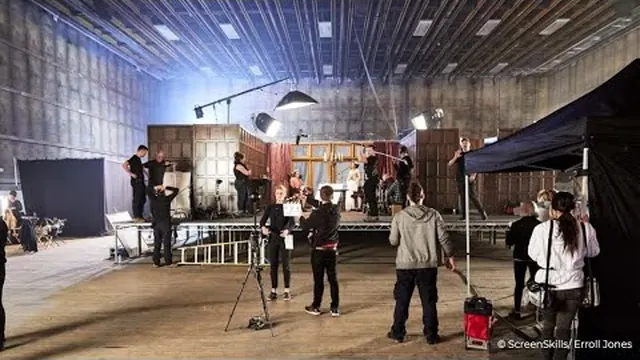
How learning with FIF works
Learning path. Free films in teaching order, for one craft. Watch, tick them off and test yourself. It's practice that prepares you for an Academy course.
- Learn onlineFree films, paths and Academy coursesYou are here
- Competency checkA short check with us, online or in person
- In-person practicalOn our unit at Pinewood or 3 Mills
- FIF CertificateFrom the practical only
The FIF Certificate comes only from the practical. How it works · Book a competency check
 Who's Who in the Movie CreditsFilmmaker IQ · Lesson26 min.
 A Day in the Life of a Camera Trainee on the Set of Bridgerton | ShondalandShondaland · Lesson8 min.
 Shots vs. Set UpsRocketJump Film School · Lesson6 min.
 5 MUST KNOW Tips when Working On SetFilm Riot · Lesson10 min.
 How to Use a Walkie Talkie on SetB&H Photo Video Pro Audio · Lesson5 min.
 How To Slate On Set | Clapperboard Tutorial for 2nd ACsDeity Microphones · Lesson6 min.
 How to be a Great Runner / Film Career Advice #13Raindance · Lesson3 min.
 ELECTRICITY Basics on Film Sets!Cutthroat Grip & Lighting · Lesson6 min.
 Tips to increase mental health on setThe Film and TV Charity · Lesson4 min.
 Trainee Finder Launch Webinar 2027/28ScreenSkills · Lesson1 h 6 min.
 How to get your first job in filmScreenSkills · Careers2 min.
 How to make the most of your first jobScreenSkills · Careers2 min.
 Creating a CV That Gets You Noticed in Film & TVERIC · Lesson26 min.
 Tax with Tony - am I self-employed?Bectu · Lesson1 min.
Go further
Beyond YouTube, labelled honestly. Free first. Paid options are labelled.
- From script to screen: your first day Free with sign-up
ScreenSkills. What to expect on day one. - From script to screen: set etiquette Free with sign-up
ScreenSkills. How to behave on set. - From script to screen: how the set is run Free with sign-up
ScreenSkills. The AD team, the running order and the day. - From script to screen: freelance life Free with sign-up
ScreenSkills. Working freelance in UK screen. - Tackling harassment and bullying at work Free with sign-up
ScreenSkills. Required on many UK productions. - Introduction to mental health awareness at work Free with sign-up
ScreenSkills. Look after yourself and colleagues. - ScreenSkills Trainee Finder Free to apply when a round is open
ScreenSkills. For new entrants aged 18+ with the right to work in the UK, who have finished full-time education and have under 12 months' paid experience in the department. A place on Trainee Finder is not a guaranteed placement: productions choose. Check whether a round is open (checked 11 November 2026). - Becoming a TV and Film Runner Paid (£75)
NFTS. Two-hour online session. - Entry Level Roles in Film and HETV Paid (£300; bursaries)
NFTS. Two-day course. - Freelancing for TV and Film: The Essentials Paid (£175; bursaries)
NFTS. One-day course. - Working for yourself Free
GOV.UK. Registering as self-employed and Self Assessment. - HMRC list of behind-camera roles normally treated as self-employed Free
HMRC. Check whether your grade is on the list. - HSE: film, theatre and broadcasting Free
Health and Safety Executive. Official UK safety guidance. - The Film and TV Charity Free
The Film and TV Charity. 24-hour support line and grants. - Apprenticeship standard: Production assistant – screen and audio (Level 3) Free to the apprentice (paid job; employer and government fund training)
Skills England. Shows what the apprenticeship covers; find live vacancies on Find an Apprenticeship.
For learners and trainers
Every lesson is a free video by its original maker, played from YouTube with privacy-enhanced settings. Found a broken video? Email [email protected].