
Explainer 01 · How it all works
The most disciplined workplace you will stand in.
Fifty to two hundred people, most of whom met weeks ago, working to one call sheet and one chain of command. Every hour costs.
What do I do the night before?
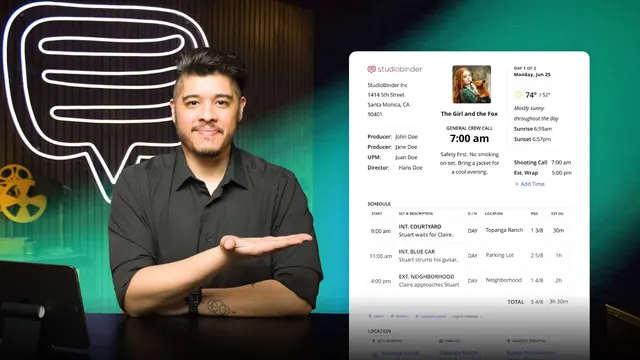
- Read the call sheet twice. It arrives the evening before.
- Work out when to leave. Call time means ready to work, not reaching the gate. Add at least half an hour.
- Learn the calls. They run dozens of times a day, in the same order. See the table below.
The call sheet, line by line
| What is on it | What it means for you |
|---|---|
| Your call time | On set, ready to work. Not arriving, not parking. |
| Unit base and location | Two places, often a shuttle apart. The wrong one is the commonest first-day mistake. |
| Scenes, in shooting order | Page counts, a one-line description, day or night, interior or exterior. |
| Cast numbers and times | Cast are numbered. Their pick-up, hair and make-up, costume and on-set times are listed separately. |
| Weather, sunrise and sunset | On an exterior day this is the real schedule. |
| Nearest hospital, with the route | It's on there because it has been needed. |
| Departmental notes | One line per department. Read yours: nobody will repeat it. |
| Advance schedule | Tomorrow and the day after, provisionally. |
The 2nd assistant director (2nd AD) produces it; the 1st AD and the production manager sign it off.
Who is in charge of what?
| Who | What they are responsible for |
|---|---|
| Director | What the film is. Performance, staging and the final creative call on every shot. |
| First assistant director (1st AD) | The day. The schedule, the safety of the floor, the order of the work and the calls that start and stop a take. |
| 2nd and 3rd ADs | The call sheet, cast movement, supporting artists and the paths between unit base and set. |
| Producer and line producer | The money and the deal. Usually not on the floor. |
| Director of photography (DoP) | How it looks. Runs camera, lighting and grip through their heads of department. |
| Camera operator, focus puller (1st AC), clapper loader (2nd AC), camera trainee | Framing, focus, the slate, media, batteries, and everything the department needs before it's asked for. |
| Gaffer and best boy | Lighting. The gaffer turns the DoP's intent into lamps and power; the best boy runs the crew, the truck and the distribution. |
| Key grip, best boy grip and grips | Everything the camera sits on and moves on, and the safety of all of it. |
| Production sound mixer and assistants | Recording dialogue. The only department entitled to stop a take for a noise nobody else can hear. |
| Script supervisor | Continuity, screen direction, eyelines and the record of what was shot. Sits beside the director. |
| Heads of art, costume, hair and make-up, SFX, locations, transport | Each runs a department with its own crew, truck and timetable. |
The director decides what the film needs. The 1st AD runs the floor. Everyone else answers to their HoD.
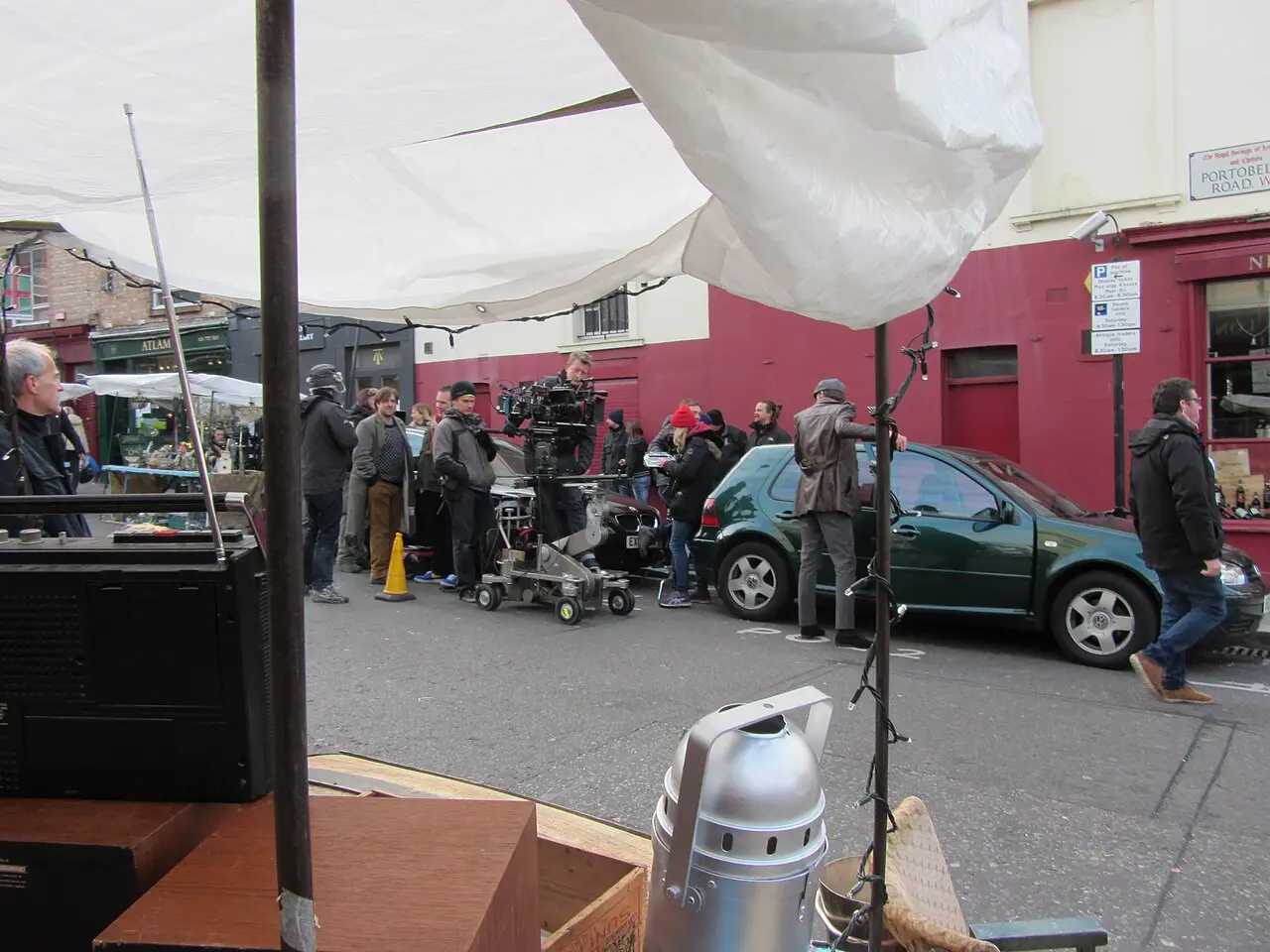

The calls, and who says each one
| Call | Who says it | What it means |
|---|---|---|
| "Lock it up" | 1st AD, relayed by the 3rd AD and anyone on a lock-up point | Stop moving, stop working, stop talking. Nobody enters or leaves. |
| "Turn over" | 1st AD | Start recording. |
| "Speed" or "sound speed" | Production sound mixer | Sound is running and stable. |
| "Rolling" or "camera speed" | Camera operator or focus puller | The camera is running. |
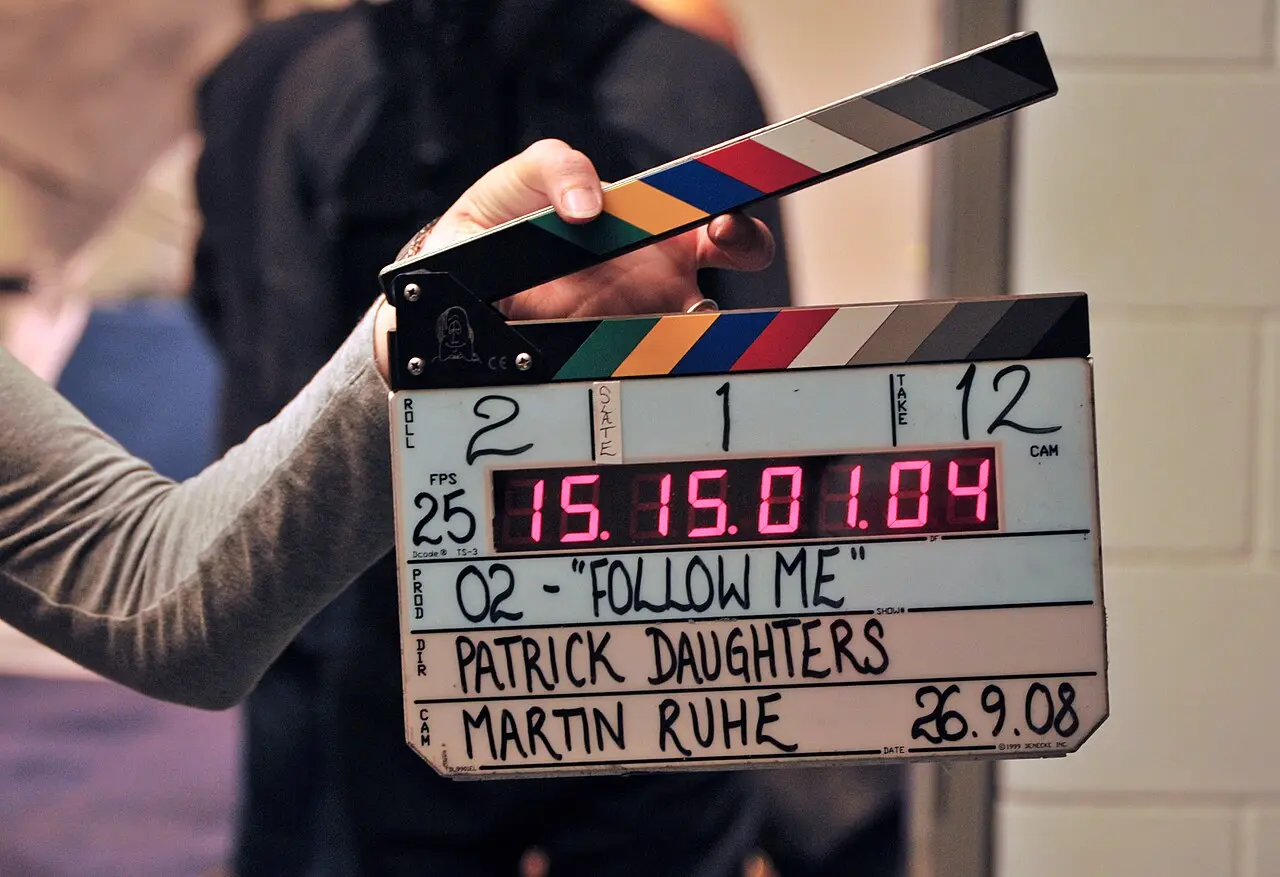
| "Scene 42, take 3, mark" | Clapper loader (2nd AC) | The slate identifies the take and syncs picture to sound. Then clear frame, fast. |
| "Action" | Director | Performance begins. On a big background day the 1st AD may cue the supporting artists first. |
| "Cut" | Director, or anybody, for safety | See something dangerous? Call it, loudly, at once. Nobody will be angry. |
| "Check the gate" | Called for by the 1st AD; the focus puller checks | The last technical check before a setup is released. On film it inspects the gate for hair or debris; on digital it survives as "checking the take". |
| "Moving on" | 1st AD | That setup is finished. The whole floor changes at once. |
| "That's a wrap" | 1st AD | The day, or the production, is over. |

The shape of the day
Ten or eleven hours, in a sequence that barely varies.
TV drama is usually 10 hours plus lunch; big features 11 plus lunch; continuous days are an hour shorter with no sit-down lunch. (Pact/Bectu terms, as summarised on the Bectu lighting and standby cards.)
- Unit call. Trucks open, breakfast on, departments prep. Camera builds, sparks run cable, the art department dresses the set.
- Blocking rehearsal. Director, cast, DoP, 1st AD and the HoDs involved. Stand well back and watch: this sets the next three hours.
- Lighting and marking. Stand-ins take the cast's positions, marks go down, lighting rigs the scene and grip builds whatever the camera moves on. The longest block of the morning.
- First shot. A good unit aims to turn over within about ninety minutes of call.
- Coverage. The same scene from other positions: the reverse, the singles, the inserts. Each is a relight and a reset.
- Lunch. Under the Pact/Bectu TV drama terms it falls within six hours of unit call. On a continuous working day (CWD) there is no sit-down lunch; food comes to the floor.
- The afternoon. Usually faster. If the day is behind, the 1st AD starts choosing what to lose.
- The Abby Singer, then the Martini. The second-to-last shot, then the last. At the Abby Singer, start planning your pack-down.
- Wrap and turnaround. Kit packed, trucks loaded, and the rest period starts: 11 hours under the Pact/Bectu TV drama terms. A late wrap moves the whole of the next day.
Why does it go so quiet?
The boom is a few feet above the actors. It catches a zip, a footstep, a radio squelch. Anything it catches is lived with or replaced later at cost, so sound can stop a take everyone else liked.
Turn your phone off, not to silent: a phone on silent still interferes with radio mics.
What does a trainee actually do?
A trainee is a working member of the department:
- batteries charged, rotated and handed out;
- media carried between camera and the data manager (often the only copy of the day's work);
- marks laid and re-laid;
- kit built, dried, cased and counted;
- radio answered first time.
Have the thing in your hand before it's asked for, and you'll be hired again.
Watch
 The Anatomy Of A Call SheetStudioBinder · original on YouTube
 11:35What A Director Does On Set: Crew BreakdownIn Depth Cine · original on YouTube
 Assistant Director Film Duties Explained — AD Donald Sparks InterviewStudioBinder Academy · original on YouTube
 Master Series: What Productions Need to Know about the UK Tax ReliefEntertainment Partners · original on YouTube
Last reviewed 9 November 2026