
Camera Foundation
- Lesson5 of 8
- Time55 min
Slates, marks and camera reports
Outcome
Slate takes using the British running slate and complete a camera report accurately.
Mapped to 3 ScreenSkills checklist lines
- ScreenSkills second assistant camera / clapper loader skills checklist · Core responsibilities: "Operate clapperboards and clearly announce takes"
- ScreenSkills second assistant camera / clapper loader skills checklist · Core responsibilities: "Log clapperboard information on camera report sheets"
- ScreenSkills camera trainee skills checklist · Core responsibilities: "Mark actor positions and focus marks, and operate the clapperboard"
ScreenSkills checklists are guides, not accreditation. This course is not endorsed by ScreenSkills.
Watch
4 films · about 37 minutes
Your browser blocked the player's tracking script, so watch time can't be credited here. Use the demo skip below.
More like this: 2nd AC, clapper loader and loading film path · Your first day on set path
Films are made and owned by the channels named, and play from YouTube. Inclusion here is not an endorsement either way.
The slate
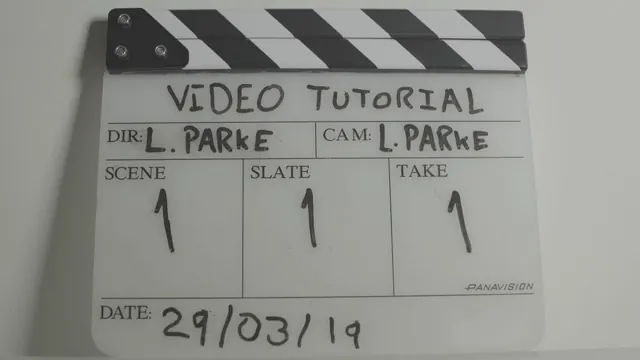
- The board carries: production, director, DoP, camera (A, B), roll or card, slate number, take, date, and flags such as 'night', 'int/ext', 'mute' (no sound) or 'VFX'.
- On a running slate, every new set-up gets the next number; takes count up within it. Call it clearly, 'Slate 52, take 3', then a clean, sharp clap, held still in frame.
- For a close-up, clap softly near the actor's face, and warn them first. With two cameras, call the slate for both ('A and B, slate 52 take 3') and clap once, in both frames.
- Missed the front? Tail slate (end board): board upside down, called and clapped at the end of the take.
Marks
- The clapper loader lays actors' marks during the marking rehearsal: usually a T or V in coloured tape, one colour per actor, with the actor's toe at the line.
- Marks also help the focus puller: distances to marks are noted for focus.
The camera report
- One sheet per card or roll. For each take: slate, take, lens, T-stop, filter, frame rate, notes, and whether it's a good take (circled or ticked).
- Reports go to the DIT and editorial with the media. A wrong slate number on a report costs editors hours. Write clearly; correct with a single line, never scribble.
- Many productions now use digital reports on a tablet. The information is the same.
Check
3 questions drawn from 8 · pass mark 80% · safety-critical questions must be right · 3 attempts in 24 hours · new questions each time
Watch the films to open the check.
Do
Fill in a camera report · 20 minutes
A camera, card A003. Running slate; last slate was 51. Lens 32mm T2.8 throughout, no filter, 25 fps. Events: new set-up, take 1 (good); take 2 (actor dried); take 3 (good, circled); new set-up on a 75mm at T2, take 1 (front slate missed, end board); take 2 (good, circled); then a mute insert of a hand on a door, on the same 75mm at T2, take 1 (good).
How it's marked
- Slates 52 (takes 1-3), 53 (takes 1-2), then a new slate 54 for the mute insert (a new set-up)
- Lens and T-stop right for each
- Notes: dried on 52/2, end board on 53/1, mute on 54/1
- Circled takes marked
Met or Not yet, with a comment from a trained reviewer. Until accounts open, open the model answer after you submit and mark your own work against it.
Model answer (open after you submit)
52/1 32mm T2.8 good. 52/2 32mm T2.8 actor dried. 52/3 32mm T2.8 good, circled. 53/1 75mm T2 end board (tail slate). 53/2 75mm T2 good, circled. 54/1 75mm T2 mute insert, hand on door, good. (An insert is a new set-up, so it takes the next slate.)
Reflect
Record
This is everything kept about this lesson. In the pilot it's held by Futures in Film CIC in your account; Screen Sisters CIC sees named records only if you agree. Your data
Moving on doesn't complete a lesson. A lesson is complete when the films are watched, the check is passed and the task is marked Met.