
Day One
- Lesson5 of 6
- Time30 min
Set etiquette, and being trusted
Outcome
Behave on set in the ways HoDs trust: eyelines, other departments' kit, phones, confidentiality, and saying what you don't know.
Mapped to 2 ScreenSkills checklist lines
- ScreenSkills floor runner / set PA skills checklist · Skills: "Act honestly and on principle, and treat others with respect and inclusiveness"
- ScreenSkills camera trainee skills checklist · Transferable skills and attributes: "Learning from experience and seeking feedback"
ScreenSkills checklists are guides, not accreditation. This course is not endorsed by ScreenSkills.
Watch
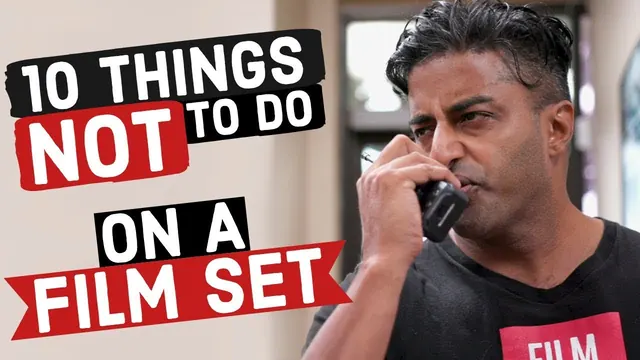
2 films · about 10 minutes
Your browser blocked the player's tracking script, so watch time can't be credited here. Use the demo skip below.
More like this: The production office path · Your first day on set path
Films are made and owned by the channels named, and play from YouTube. Inclusion here is not an endorsement either way.
Where you stand
- Stay out of an actor's eyeline: the line of their gaze during a take. If you're not sure, ask quietly, 'Where's the eyeline?'
- Never walk through a lit set, or across the frame, unless asked. Stay near your post. If you leave it, tell someone.
- Don't sit on other departments' kit (apple boxes, cases, the dolly). Ask first.
What you carry, and what you share
- Phone on silent, away during takes. No photos, no posts, no 'behind the scenes' stories. Most productions make you sign a confidentiality agreement; even if you didn't, the answer is still no.
- Leave cast alone unless your job needs you to talk to them. No selfies, no autographs.
- Carry a pen, a notebook, water, a snack, layers and waterproofs.
Being trusted
- Never say you know how to do something if you don't. Say 'I haven't done that yet: can you show me?' HoDs trust people who say that.
- Be on time, every day. Be kind to everyone, from the drivers to the lead actor.
- If you're bullied, harassed or treated unfairly, tell someone you trust on the production. The Film and TV Charity runs a free Bullying Advice Service, and our Get help now page lists other routes.
Check
3 questions drawn from 8 · pass mark 80% · safety-critical questions must be right · 3 attempts in 24 hours · new questions each time
Watch the films to open the check.
Do
What would you say? · 10 minutes
Write the words you would actually say in each situation. One or two sentences each.
How it's marked
- Asks to be shown rather than guessing
- Refuses the photo and gives no details
- Moves, and apologises briefly to the AD or HoD at the right moment, not during the take
Met or Not yet, with a comment from a trained reviewer. Until accounts open, open the model answer after you submit and mark your own work against it.
Model answer (open after you submit)
1. 'Sorry, which case is the 18 in? I don't want to grab the wrong lens.' 2. 'Can't, sorry: no photos from set. I'll tell you about it when it's out.' 3. Step out of the eyeline straight away; at the next break, a quiet 'Sorry, I was in the eyeline: where should I stand?'
Reflect
Record
This is everything kept about this lesson. In the pilot it's held by Futures in Film CIC in your account; Screen Sisters CIC sees named records only if you agree. Your data
Moving on doesn't complete a lesson. A lesson is complete when the films are watched, the check is passed and the task is marked Met.