

Play · Finance stack
Where does a film's money come from, and in what order?
Four layers, each waiting for the others to commit. Stack them, then match each to its job.
Watch: how films are financed
 Master Series: What Productions Need to Know about the UK Tax ReliefEntertainment Partners · original on YouTube
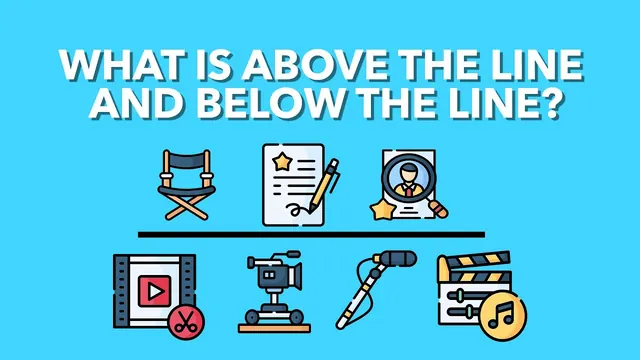 What's the Difference Between Above and Below the Line in the Film Industry?The Content Bebop · original on YouTube
 Screen Careers: Production AccountantFfilm Cymru Wales · original on YouTube
 What is a Call Sheet — What Goes On It and WhyStudioBinder Academy · original on YouTube
A British independent film is financed from several sources at once, each waiting for the others to commit. Put the four layers in order, with the foundation at the bottom, then match each layer to what it does.
The stack, foundation first
- Public funding and broadcasters. National and regional funds, and a commission or pre-buy. On HETV the commission is often most of the budget; on film it's one slice. Why here: A fund award or a commission is a named, committed source. It is the kind of money the layers above can lean on.
- UK expenditure credit. A share of qualifying UK spend comes back as a tax credit, reliable enough to borrow against. Why here: Because it is reliable enough to borrow against, lenders will count it. It comes back as a share of qualifying UK spend.
- Pre-sales and equity. A foreign distributor buys release rights in advance; private investors take risk for a share of profit, recouped last. Why here: Money promised in advance and money at risk. The investors are paid back last, which is why they come after the more certain sources.
- Gap and bridging finance. Loans against money contracted but not yet landed. The interest is why a week's slip is a financial event. Why here: A loan against money that is contracted but not yet landed, so it can only be sized once the layers beneath it are in place. That is why it sits on top.
Gap and bridging finance lends against money that is contracted but not yet landed, so it can only sit on top of the other layers. The order of the lower layers varies from film to film, and an industry adviser should check this running order.
Don't mix this up with recoupment order, which is how money coming back is paid: fees and expenses, debt, the gap lender, equity, then any profit share.
UK expenditure credit rates (checked 8 November 2026)
| Relief | Headline rate | What it applies to |
|---|---|---|
| AVEC, standard rate | 34% (taxable), about 25.5% net | Film and HETV, on up to 80% of core expenditure. HETV needs average core spend of at least £1m per hour of slot length. |
| Independent Film Tax Credit (IFTC) | 53% (taxable) | Films with total core expenditure up to £23.5m, on the first £15m. The often-quoted 53% applies to independent film only. |
| Visual effects credit | 39% (taxable), about 29.25% net | UK VFX costs, from 1 January 2025, for productions on the standard rate. Qualifying VFX spend is exempt from the 80% cap. IFTC films can't also claim it. |
From 1 April 2025 new productions claim under the expenditure credits; the older reliefs end for all productions on 1 April 2027 (BFI). Source: BFI, UK creative industry tax reliefs, checked 8 November 2026. Rates change, so check the BFI before you rely on them.
Everything in the game comes from how a film gets made and how the money works. The rates are copied from the second, checked on 8 November 2026. We have not found a finance explainer in Watch and Learn that covers the whole stack; the video linked at the end is the nearest, on the funding side.
Last reviewed 9 November 2026