
Explainer 02 · How it all works
Years of paperwork, a few weeks of filming.
Seven stages. The shoot is the shortest and the most expensive, and by then almost every decision has been made.
Timings are typical for UK independent film and HETV; every production differs.
The seven stages, and how long each takes
| Stage | What happens | Who runs it | Typical duration |
|---|---|---|---|
| Development | An idea becomes a script somebody would risk money on. Rewrites, attachments, a budget and a pitch document. | The producer, with the writer | One to six years. Most projects stop here. |
| Financing | Money assembled from several sources at once, none of which will move first. Ends in a green light or in silence. | The producer and the financiers | Months to years, overlapping development |
| Pre-production (prep) | Crewing, locations, design, build, schedule, budget lock, recces, tests, insurance. | The line producer and the 1st AD | Six to twelve weeks on a modest film; longer with a build |
| Production (the shoot) | The only stage with the whole crew on the payroll at once. | The 1st AD, on the floor | Four to twelve weeks for a feature; longer for a series |
| Post-production | Edit, sound, music, visual effects, colour. The film is made a second time. | The post-production supervisor and the editor | Four months to a year |
| Delivery | A long technical list of masters, subtitles, audio tracks and compliance documents, checked frame by frame. | The post-production supervisor | Weeks, and always tighter than planned |
| Distribution | Festivals, sales, a release plan, marketing and the long tail afterwards. | The distributor and the sales agent | Months to decades |
Development, where most films stop
A producer options a book, commissions a script or picks one up. An option buys the exclusive right to set it up for a fixed period. Most lapse.
- The script goes round. Draft after draft, with notes from the producer, financiers, a broadcaster or streamer, then the director.
- Attachments make it real. A director, a lead actor, sometimes a DoP. Films are financed on a script plus the names attached.
- Someone builds a budget. A line producer or production manager breaks down the script, counts the days and prices it.
- A deck exists. Tone, comparison titles, audience, cast wish-list and finance plan.
Financing is a stack, not a cheque
A British independent film is financed from several sources, each waiting for the others to commit. Building that stack is the producer's craft.
| Source | How it works |
|---|---|
| Public funding and broadcasters | National and regional funds, and a commission or pre-buy. On HETV the commission is often most of the budget; on film it's one slice. |
| UK expenditure credit | A share of qualifying UK spend comes back as a tax credit, reliable enough to borrow against. Try building one: Build the finance stack. |
| Pre-sales and equity | A foreign distributor buys release rights in advance; private investors take risk for a share of profit, recouped last. |
| Gap and bridging finance | Loans against money contracted but not yet landed. The interest is why a week's slip is a financial event. |
Prep, where the film is made
At the green light the production office opens. HoDs are hired first, then crews in build order: art and construction early, camera later.
- Schedule. Scenes reordered by location, cast availability and daylight. You won't shoot in story order.
- Budget lock. Every department gets a figure. Anything new comes out of another line.
- Recces. Visits to possible locations. On the tech recce, HoDs work out power, noise, access and time.
- Design and build. Sets drawn, built and dressed; costume designed, sourced, fitted and broken down. The longest lead time on most productions.
- Camera and lighting prep. The package is checked at the rental house, lenses tested, and the DoP shoots tests for the grade. A trainee learns more in prep than anywhere else.
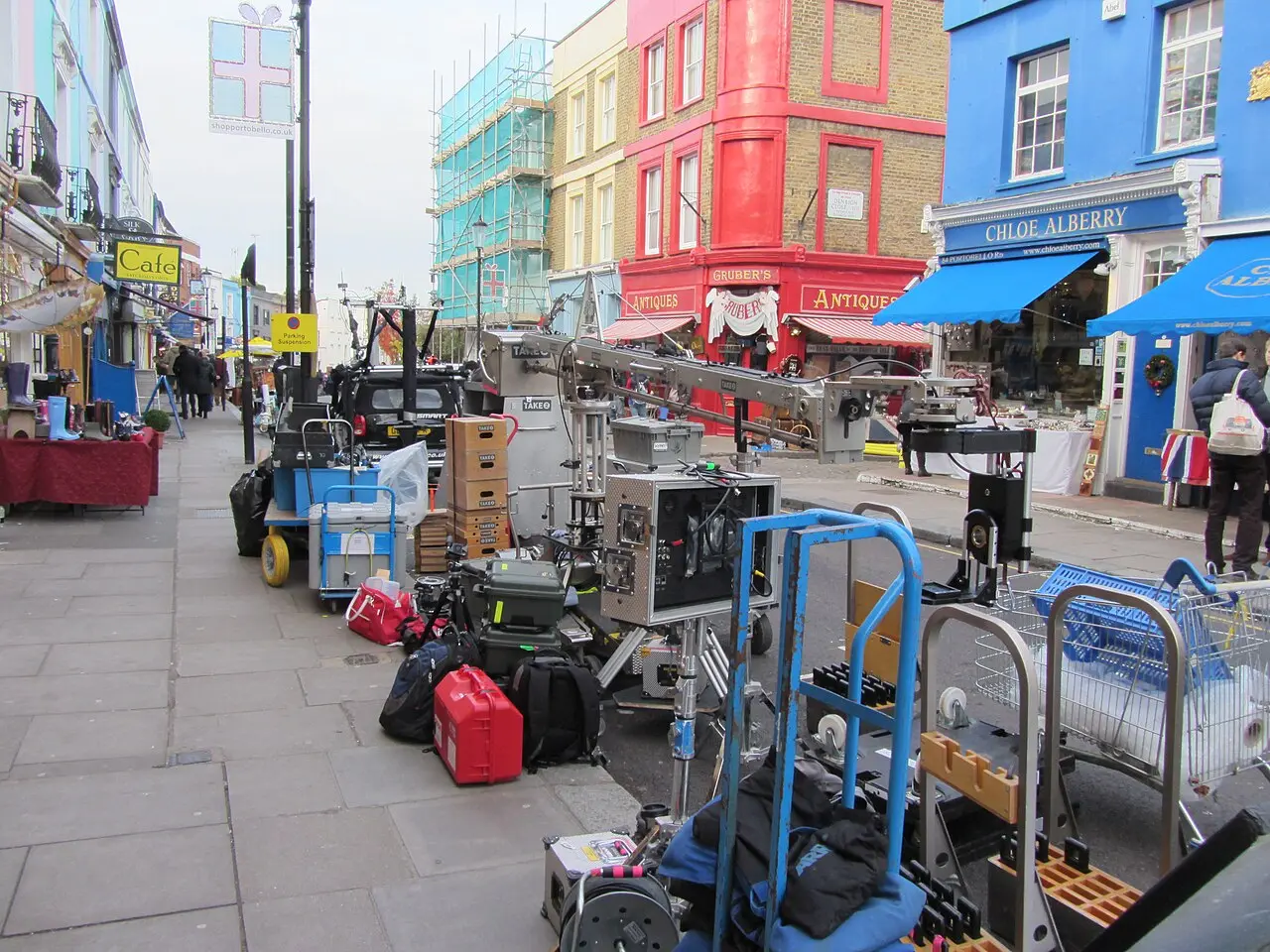
- Paperwork. Risk assessments, insurance, permits, road closures, child performance licences and chaperones where children are cast, medical cover and a movement order.

After the shoot
Post, delivery and distribution.
| Stage | What happens |
|---|---|
| Picture edit | An assembly, then a director's cut, then a producer's cut, then notes from financiers and broadcasters. Scenes and sometimes whole characters disappear here. |
| Sound | Dialogue editing, ADR, Foley, atmospheres and effects, then the mix. |
| Visual effects | Mostly invisible on British drama: removing a modern aerial, extending a set, fixing continuity, cleaning a sky. |
| Colour grade | The DoP and a colourist set the final look, shot by shot. |
| Delivery | Masters at several specifications, a textless version, a music and effects (M&E) mix for dubbing, subtitles, audio description, QC reports, chain-of-title paperwork. Checked by someone paid to reject it. |
| Distribution | Festivals, a sales agent selling territory by territory, a distributor planning a release, and a marketing spend. |
Six things nobody says out loud
- The shoot is the shortest stage. Development and post each usually take far longer.
- Nothing is shot in story order. A lead may play the end of a relationship in week one and its start in week five.
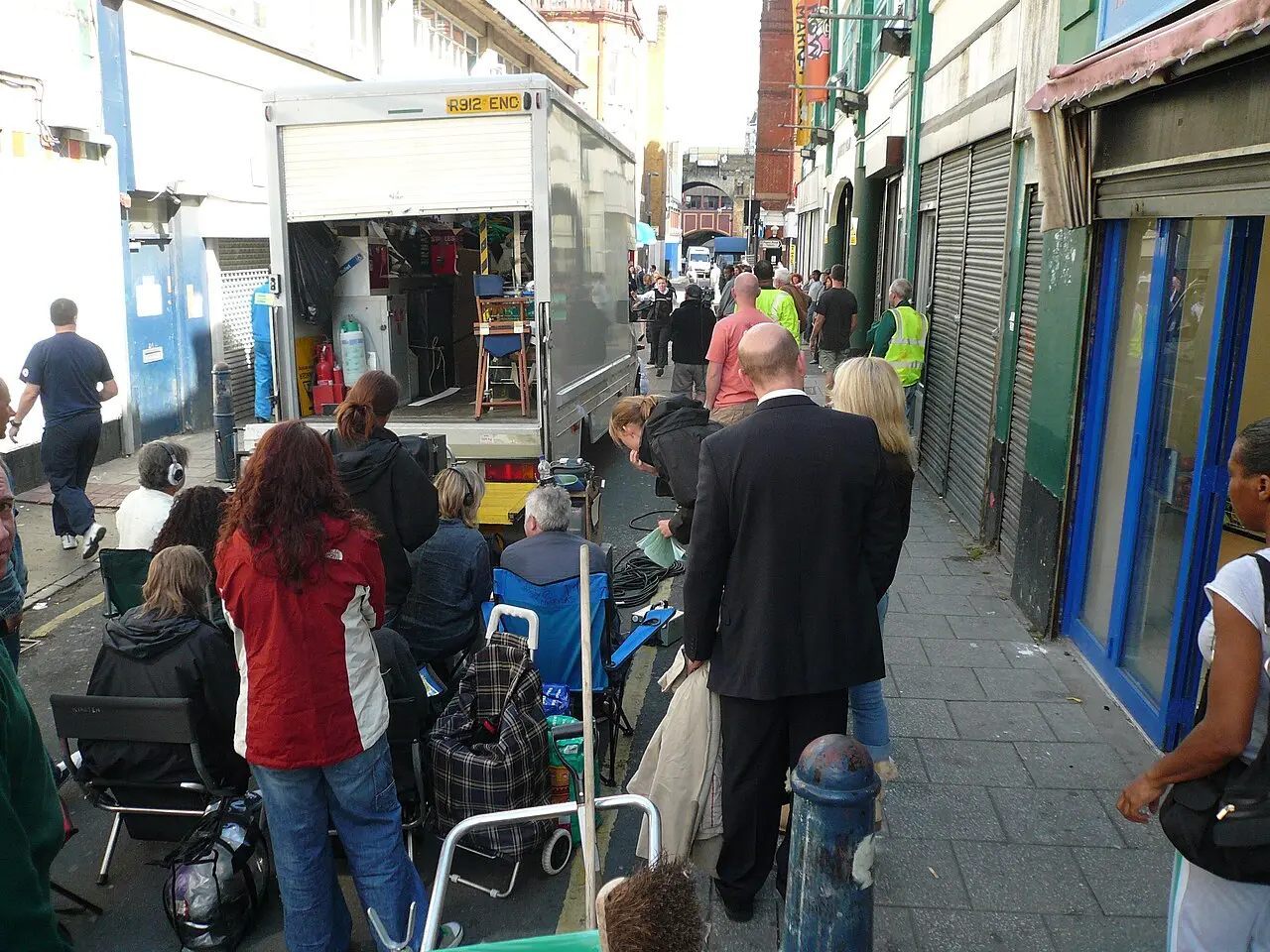
- Almost everyone is freelance, hired for one production and looking for the next before it wraps.
- The green light is a contract, not confidence. Productions collapse days before it.
- Post starts before the shoot ends. The editor cuts from the first day of rushes, so problems show while there's time to reshoot.
- The credits are long because the list is accurate. A UK drama has well over a hundred distinct grades.

Where do I fit?
Every stage is somebody's whole career. Post has technical jobs few hear about at school, and delivery and distribution are among the least contested. The Careers A–Z sorts them by department and grade.
Watch
 Master Series: Film Financing Explained: Soft Money FinancingEntertainment Partners · original on YouTube
 A Guide to Funding Your Film — How Development Works in Film [Stages of Filmmaking, Ep 1]StudioBinder · original on YouTube
 What's the Difference Between Above and Below the Line in the Film Industry?The Content Bebop · original on YouTube
 What is a Call Sheet — What Goes On It and WhyStudioBinder Academy · original on YouTube
Last reviewed 9 November 2026