
Learning path · Post-production
VFX basics
VFX foundations: the pipeline, shooting for VFX on set, and keying, tracking, roto and compositing in Fusion, Nuke and After Effects.
Free films in teaching order, for one craft. Watch, tick them off and test yourself. It's practice that prepares you for an Academy course. This one prepares you for the vfx course (coming).
Lesson 1
Introduction to On-Set VFX Data
Visual Effects Society · 1:00:04 · original on YouTube
You will learn: Know what on-set VFX data is gathered and how to fit in around the shoot.
Watch for: Long: watch the first 20 minutes. Listen for when the data team gets time on set, and who gives it to them.
Safety first
On-set data, scanning people, screens and crunch
VFX works in two places: on set, gathering data around moving kit, and in the studio, at a screen for very long hours. Both have hazards, and both handle images of real people that need consent and care.
The hazards
- On set: data around moving kitMeasuring, HDRI and witness cameras happen between set-ups, near cranes, track and lamps. Work where the 1st AD and grips allow, and never climb to place tracking markers: ask for proper access.
- Scanning peoplePhotogrammetry and body or face scans are a performer's likeness. They need informed, written consent for the use agreed in their contract (Equity's guidance), and scan data that can identify someone is personal data under UK GDPR.
- Lasers and LiDARSet and object scanners can use lasers. Follow the scanner's class rules, keep people's eyes out of the beam, and clear the area while scanning.
- Your workstationChair, desk and screens set up for you, with short breaks away from them. The DSE Regulations apply if you're employed.
- CrunchVFX deadlines bunch up. Most workers can't be made to average more than 48 hours a week unless they've opted out in writing. Talk to your lead early, and know Bectu has a VFX branch.
- Client securityUnreleased shots stay on the studio's systems. Many clients audit vendors against the Trusted Partner Network standard: no personal devices, no sharing, no screenshots.
Who is responsible
- The VFX supervisor leads on set; the on-set data wrangler works to the 1st AD's timings.
- The VFX producer sets schedules and hours; leads look after their teams.
- Production and the studio agree what scan data is collected, why, and how long it's kept.
As a trainee, never
- Never scan or photograph a performer for VFX without their consent and production's say-so.
- Never take client shots off the studio's systems.
- Never climb a set or a rig to place a marker.
Anyone can say stop. If something feels wrong, say so to your head of department or the 1st AD.
Where this comes from
- HSE: display screen equipmentThe Health and Safety (Display Screen Equipment) Regulations 1992: workstation set-up, breaks and eye tests.
- GOV.UK: maximum weekly working hoursThe Working Time Regulations 1998: the 48-hour average, opting out, and rest breaks.
- HSE: non-ionising radiationIncluding the Control of Artificial Optical Radiation at Work Regulations 2010 (lasers and very bright sources).
- ICO: biometric data guidanceWhen face and voice data used to recognise someone is special category data.
- Equity AI toolkitEquity's advice on digital likeness scanning, voice capture and generative AI for film and TV.
- Trusted Partner NetworkThe content security standard many studios and streamers ask post and VFX vendors to meet.
- The Film and TV Charity: get supportFree 24-hour Support Line on 0800 054 0000, plus money, mental health and bullying advice.
Checked 13 November 2026. This is awareness, not a safety qualification: follow your production's risk assessment and your head of department.
By the end you will be able to
- Explain the VFX pipeline and the main roles
- Light a green screen, place tracking markers and capture lens grids and HDRIs on set
- Key and composite a green screen shot in Fusion and Nuke
- Planar-track, camera-track and rotoscope a shot
Test yourself
Could you do it on a set?
4 real situations, one for each thing this path teaches. It's optional practice, not pass or fail, and your answers stay on this device.
Next: do it for real
VFX course: coming.
There isn't an Academy course for vfx yet. Register interest and we'll tell you when it opens. Meanwhile, Day One covers safety and how a set runs for every department, and experienced crew can book a competency check directly.
How learning with FIF works
Learning path. Free films in teaching order, for one craft. Watch, tick them off and test yourself. It's practice that prepares you for an Academy course.
- Learn onlineFree films, paths and Academy coursesYou are here
- Competency checkA short check with us, online or in person
- In-person practicalOn our unit at Pinewood or 3 Mills
- FIF CertificateFrom the practical only
The FIF Certificate comes only from the practical. How it works · Book a competency check
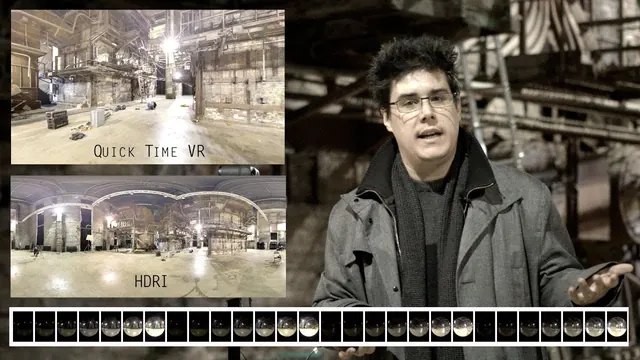 How to make a HDR onset for CG lightingHugo's Desk · Lesson10 min.
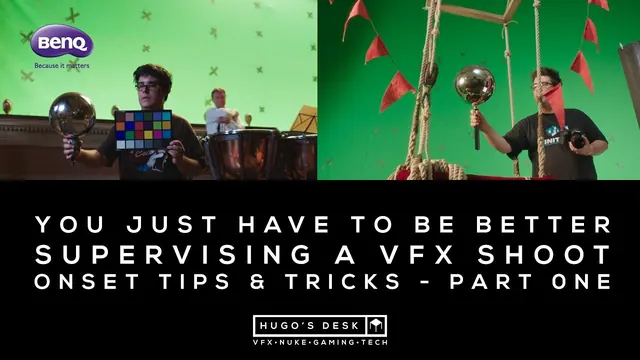 My Onset VFX Supervisor Gear - Part OneHugo's Desk · Lesson34 min.
 Cinematography for VFXEscape Studios · Lesson2 min.
 Advanced Green Screen in FusionCasey Faris · Lesson21 min.
 DaVinci Resolve 17 Fusion Training - 3D Compositing in FusionBlackmagic Design · Lesson1 h 14 min.
 Learn How to Rotoscope in After Effects in Under Four Minutes | Adobe Video x @filmriotAdobe Video · Lesson4 min.
 Tom Carter, Tracker at FramestoreScreenSkills · Lesson3 min.
Go further
Beyond YouTube, labelled honestly. Free first. Paid options are labelled.
- Nuke Non-commercial Free
Foundry. Free learning licence of the industry-standard compositor. - Blender tutorials Free
Blender Foundation. Official tutorials for free 3D and camera-tracking software. - VFX Apprentice Paid (some free lessons)
VFX Apprentice. Structured compositing courses; US-based. - DaVinci Resolve training (official books, practice media and video) Free
Blackmagic Design. Official Resolve course books with downloadable practice media; optional paid certification exams. - ScreenSkills e-learning Free with sign-up
ScreenSkills. UK industry modules, including post-production and VFX careers material. - NFTS short courses Paid (varies by course)
National Film and Television School. UK short courses in editing, colour, post and VFX; check the current list and any bursaries. - From script to screen: VFX Free with sign-up
ScreenSkills. How VFX fits into a production. - Digital Effects with DaVinci Resolve and Fusion Paid (£425; bursaries)
NFTS. Three-day course. - Adobe After Effects Paid (£425; bursaries)
NFTS. Three-day course. - UK Screen Alliance Free to browse
UK Screen Alliance. UK VFX and post trade body: careers and skills news. - Apprenticeship standard: Junior VFX artist or assistant technical director (Level 4) Free to the apprentice (paid job; employer and government fund training)
Skills England. Shows what the apprenticeship covers; find live vacancies on Find an Apprenticeship.
For learners and trainers
Every lesson is a free video by its original maker, played from YouTube with privacy-enhanced settings. Found a broken video? Email [email protected].