
Learning path · Production
Scheduling and the AD department
The AD's craft: breakdowns, stripboard schedules, call sheets, and running the floor as part of the 1st, 2nd and 3rd AD team.
Free films in teaching order, for one craft. Watch, tick them off and test yourself. It's practice that prepares you for an Academy course. This one prepares you for Production office and AD Foundation.

Lesson 1
Introduction to Health and Safety in Film and Television
XpoNorth Digital · 17:44 · original on YouTube
You will learn: Explain how UK health and safety law applies on a set, and who is responsible for what.
Watch for: UK practice. Listen for the risk assessment and how it reaches the floor: that's the AD team's job.
Safety first
The briefing, the call sheet and welfare
The AD team runs the floor, so it runs safety on the floor. The producer (as employer) owns the risk assessment; the 1st AD makes sure the whole unit hears it, follows it, and stops when something changes.
The hazards
- The safety briefingEvery day, and before every hazardous scene, the 1st AD briefs the unit: what is happening, where to stand, who is in charge (stunt coordinator, SFX supervisor, armourer, marine or animal handler) and how the scene will be stopped. Nothing hazardous is changed between rehearsal and take without the specialist and the 1st AD agreeing it.
- Risk information on the call sheetThe call sheet carries the nearest A&E, the unit medic, today's hazards (SFX, stunts, vehicles, water, animals, heights, weather), the closed-set scenes and the weather plan. If it is in the risk assessment, it should be on the sheet.
- Welfare and hoursMeal breaks, rest between days, shelter, toilets, water and warm clothing are safety, not comfort. Long days cause accidents and car crashes on the drive home (Bectu's Eyes Half Shut). Flag overruns to the production manager early.
- Children and chaperonesA child performer needs a licence from their local authority and a licensed chaperone with them at all times. Their hours, breaks and time on set are limited by law. The 2nd AD plans the day around those limits, not the other way round.
- Background artists and the publicCrowd holding areas need shelter, water and a clear route to set. On location, keep pavements passable and members of the public out of the action. Hi-vis and a marshal wherever vehicles move.
- Closed sets and dignityIntimate or nude scenes are closed sets, agreed in advance with the intimacy coordinator and the performers: minimum crew, monitors covered or switched off, no phones. The ADs hold the door.
- Accidents and near missesEvery accident goes in the accident book. Serious ones are reported to the HSE under RIDDOR by the production. Near misses are reported too: that's how the next accident is prevented.
Who is responsible
- The producer (as employer) is responsible for the risk assessment and for competent safety advice.
- The 1st AD runs safety on the floor: briefings, rehearsals and calling stop.
- The 2nd AD puts the risk information on the call sheet and manages cast welfare, children and chaperones.
- The 3rd AD and floor runners lock off, marshal and keep people where the briefing put them.
As a trainee, never
- Never let a scene change after the safety briefing without the specialist and the 1st AD agreeing it.
- Never call action on a hazardous scene until every department has said it is ready.
- Never leave a child performer without their chaperone.
Anyone can say stop. If something feels wrong, say so to your head of department or the 1st AD.
Where this comes from
- HSE: theatre, film and TVThe Health and Safety Executive's guidance for the screen and stage industries.
- HSE: managing risks and risk assessmentWhat a risk assessment is, and the employer's duty under the Management of Health and Safety at Work Regulations 1999.
- HSE: RIDDORWhich injuries and dangerous occurrences a production must report to the HSE.
- The Children (Performances and Activities) (England) Regulations 2014Licences, chaperones, hours and breaks for children on set. Scotland, Wales and Northern Ireland have their own rules.
- Bectu: Eyes Half ShutThe union's campaign on long hours, fatigue and safety in film and TV.
- BFI and BAFTA: bullying, harassment and racism guidanceThe screen industries' shared principles for preventing bullying, harassment and racism.
- CIISAThe Creative Industries Independent Standards Authority: where to report bullying and harassment.
Checked 13 November 2026. This is awareness, not a safety qualification: follow your production's risk assessment and your head of department.
By the end you will be able to
- Break down a script into scheduling elements
- Build a realistic shooting schedule on a stripboard
- Write a clear, complete call sheet
- Explain what the 1st, 2nd and 3rd ADs and floor runners each do
- Use set calls and walkie etiquette correctly on the floor
Test yourself
Could you do it on a set?
5 real situations, one for each thing this path teaches. It's optional practice, not pass or fail, and your answers stay on this device.
Next: do it for real
This path prepares you for Production office and AD Foundation.
How a production runs from office to floor: call sheets and schedules, breakdowns, paperwork and releases, locations, risk assessments and insurance in a UK frame, and floor running on the radio.
It's coming next: register interest and we'll tell you when it opens. Meanwhile, start with Day One.
How learning with FIF works
Learning path. Free films in teaching order, for one craft. Watch, tick them off and test yourself. It's practice that prepares you for an Academy course.
- Learn onlineFree films, paths and Academy coursesYou are here
- Competency checkA short check with us, online or in person
- In-person practicalOn our unit at Pinewood or 3 Mills
- FIF CertificateFrom the practical only
The FIF Certificate comes only from the practical. How it works · Book a competency check
 Script Breakdown Tutorial: Getting StartedStudioBinder · Lesson3 min.
 How to Make a SHOOTING SCHEDULE for Film (saving TIME and MONEY)The Nerdy Filmmaker · Lesson8 min.
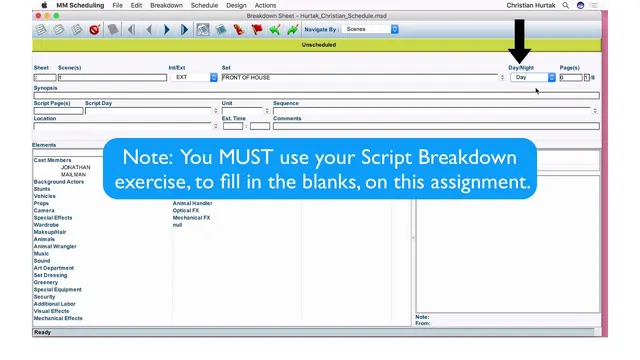 How to Create a Schedule using Movie Magic Scheduling - Instructional VideoChristian Hurtak · Lesson22 min.
 How to Make a Call Sheet for FilmLuis M Peña · Lesson19 min.
 The Anatomy Of A Call SheetStudioBinder · Lesson4 min.
 Career Advice on becoming a 2nd Assistant Director - Television by Peter H (Full Version)icould career stories · Lesson4 min.
 First assistant director, Darren FeeScreenSkills · Lesson2 min.
 What's a 2nd 2nd Assistant Director?Beyond Film School · Lesson16 min.
 Top Tips for 1st Time Assistant Directors!Beyond Film School · Lesson15 min.
 Assistant Director Film Duties Explained — AD Donald Sparks InterviewStudioBinder Academy · Lesson45 min.
Go further
Beyond YouTube, labelled honestly. Free first. Paid options are labelled.
- ScreenSkills online learning Free with sign-up
ScreenSkills. Free modules, including working on set and anti-bullying training often required for crew. - NFTS short courses Paid (varies)
National Film and Television School. Check for assistant directing and production short courses. - Bectu Membership paid
Bectu. UK union with AD rate guidance and freelancer support. - Introduction to Working in the Assistant Directors' Department Free (fully funded at time of check)
NFTS. Two-day introduction. - First Draft To Shoot: Scheduling for Film and TV Paid (£95)
NFTS. Five-hour online course. - Scheduling on Movie Magic Paid (£250)
NFTS. One-day software course. - Second Assistant Directing for Film and HETV Paid (£630; bursaries)
NFTS. Four-day course. - Assistant Directing and Floor Managing diploma Paid (£14,450)
NFTS. One-year diploma. - Select Industry Insight: first AD and third AD Free with sign-up
ScreenSkills. Career routes in the AD department.
For learners and trainers
Every lesson is a free video by its original maker, played from YouTube with privacy-enhanced settings. Found a broken video? Email [email protected].