

Learn · Shooting on film · Development
On film, the script gets read for how many times you can do it.
In development the format decision becomes structural, because everything downstream is priced off it.
What has to be decided before anyone can cost it?
| Decision | What it sets |
|---|---|
| Gauge and perf | Super 16, 35mm or 65mm; on 35mm, 4-, 3- or 2-perf. Sets the lens package, the recorded frame, what every department composes for and the footage (3-perf runs about a third longer per roll). Not a post decision. |
| Stock and speed | Faster stock buys low light and costs fineness of grain. It changes the lighting plan and the electrical package: a budget decision in a creative costume. |
| The scenes that fight you | Children and animals, weather-dependent exteriors, one-time stunts, long takes that outrun a magazine. Mark them now or meet them on the day. |
| Who loads and pulls focus | Name the clapper loader and focus puller in development. Bringing someone through for the first time is a deliberate decision, with supervision. |

The numbers (checked November 2026)
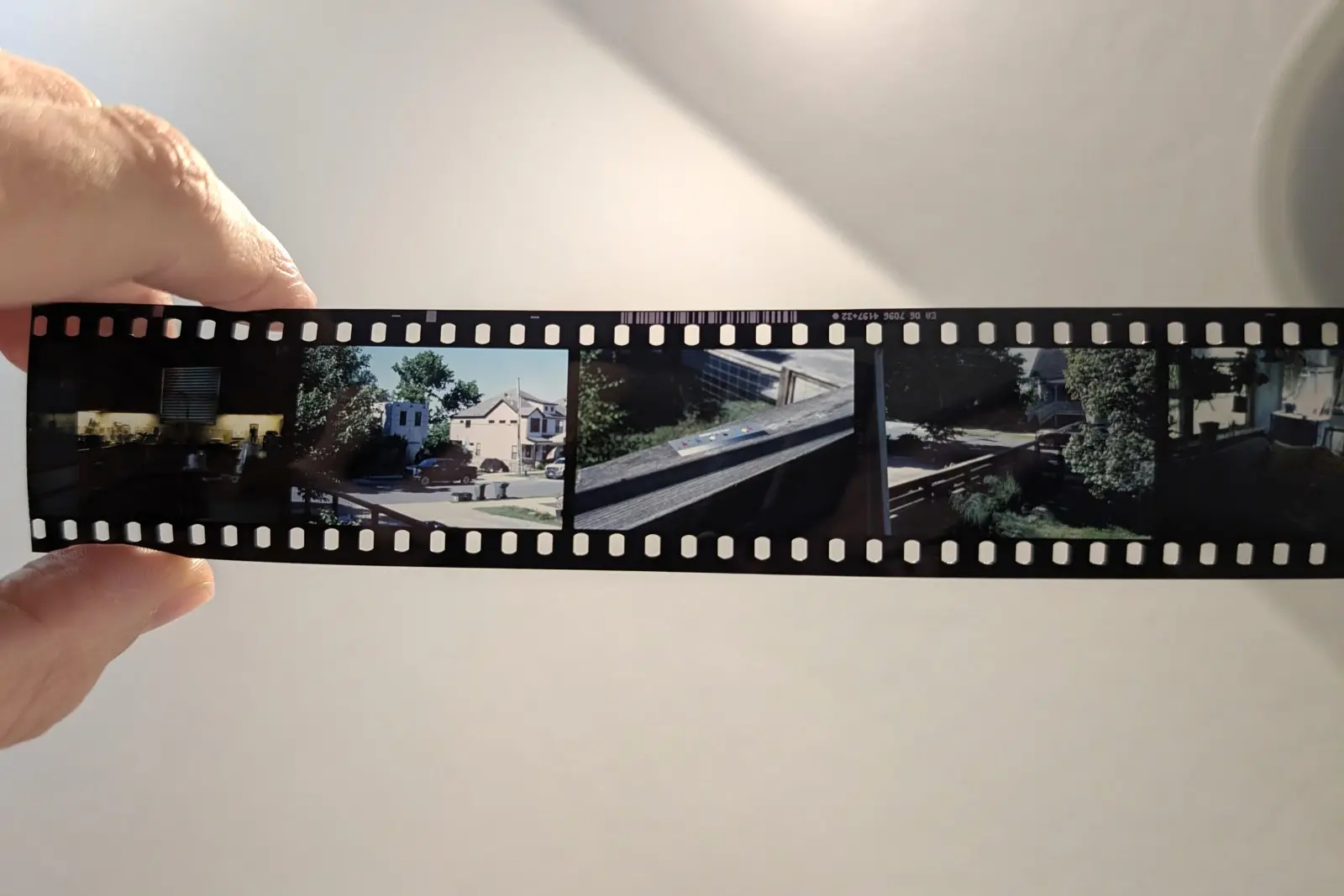
Kodak's current camera negative and reversal stocks. The number is the exposure index; D is daylight, T is tungsten. Codes starting 52 are 35mm, 72 are 16mm.
| Stock | Code | Type |
|---|---|---|
| VISION3 50D | 5203 / 7203 | Colour negative, daylight |
| VERITA 200D | 5206 / 7206 | Colour negative, daylight; new in April 2026, specialty stock by request |
| VISION3 200T | 5213 / 7213 | Colour negative, tungsten |
| VISION3 250D | 5207 / 7207 | Colour negative, daylight |
| VISION3 500T | 5219 / 7219 | Colour negative, tungsten; fastest in the range |
| EASTMAN DOUBLE-X | 5222 / 7222 | Black and white negative |
| EKTACHROME 100D | 5294 / 7294 | Colour reversal |
| TRI-X | 7266 | Black and white reversal, 16mm |
Sources: Kodak camera films; VERITA 200D announced 10 April 2026, in 16mm, 35mm and 65mm, through a Kodak sales representative (Newsshooter).

Why say the ratio out loud?
The shooting ratio is stock exposed against what ends up in the film. It decides whether a film shoot is calm or frightening, and it usually goes unspoken until week one.
Agree it in development, write it down and let every department plan against it. A director who knows the ratio can design around it.
Watch
 InCamera Exclusive: Director Yorgos Lanthimos On Why He Shoots FilmKodak Motion Picture Film · original on YouTube
 The Making of Desert Town, Asteroid City - Shot On KODAK 35mm FilmKodak · original on YouTube
 5:14How to load a 35mm Film Magazine - MovieCamSchool Of Design FTV · original on YouTube
 What is a Call Sheet — What Goes On It and WhyStudioBinder Academy · original on YouTube
Last reviewed 9 November 2026