

Step-up toolkit · 1 of 5
Run your department's budget.
The line producer gives you a number. Your job is to shoot the show inside it and tell them early when you can't.
Watch first
4They play here. Each one is also a lesson in the free step-up path.
 1:13:46How to create a production budget for your short filmBFI · 1:13:46
 57:11Master Series: Budgeting for 2025: What UK Productions Need to KnowEntertainment Partners · 57:11
 1:06:35Akbar Kurtha, 1st Assistant Production Accountant: Balancing the BooksFilmmaking Framed · 1:06:35
 3:45How to find a career in Production Accounting for film and televisionProduction Guild · 3:45
The number
Where your budget comes from
The line producer or production manager builds the show's budget and gives each department its share. Ask for your lines in writing before you hire anyone.
If the number won't cover the script, say so in prep, with costs. Not on day 10.
- Ask for the budget lines that are yours, not just a total
- Ask what's fixed (labour) and what's flexible (kit, purchases)
- Ask how overtime, loss and damage, and extra days are handled
What goes in
The lines most departments carry
Rates come from your deal memos and the agreed card. We never print day rates: check the current Bectu card for your grade.
- Labour: your crew, prep and wrap days, overtime
- Kit hire: weekly or daily, from the rental house
- Purchases and consumables: gels, tape, batteries, dressing, fabric
- Transport and storage
- Loss and damage, and the excess on the insurance
- Contingency, if the production lets you hold one

Spending
POs, petty cash and receipts
Accounts can only pay what they can match. A missing receipt is money your department loses.
- Raise a purchase order before you spend, not after
- Keep every receipt and hand in petty cash weekly
- Put hires and returns in writing, with dates
- Match the rental house invoice to the order before you sign it off
Free template
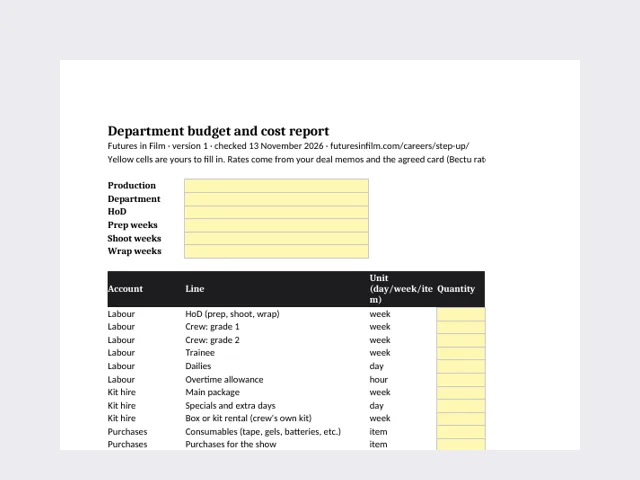
Department budget and cost report
Budget lines, POs and petty cash, and a weekly check. Rates are left blank.
Tracking
The weekly cost report
Accounts send a cost report each week. Read your lines. Check actuals against budget and update your estimate to complete: what you'll still spend to wrap.
- Over on a line? Say why and where you'll save
- Flag a change the day it happens: a new set, an extra day, a broken lens
- Keep your own tracker. The template below does it
Staying on it
Where HoDs save money without cutting safety
- Prep properly: a good recce saves a day's hire
- Return kit the day you stop using it
- Share kit with other departments when you can
- Book dailies early so they're there when you need them
- Never save on safety kit, welfare or rest
Sources
Where this comes from
Checked 13 November 2026.
- ScreenSkills HETV workforce research, 19 March 2026 · Budgeting is the top skills gap (60%).
- Bectu rate cards · Current rates by grade. We link, we don't copy.
- The Production Guild · Training for production and accounts crew.
- How it all works: the money · How a production is financed and budgeted.
The rest of the toolkit

 3 of 5Crew up, and let people goWho you book, how you check them, and ending it fairly.
 4 of 5Hard days, and keeping goingOverruns, kit failures, rows, and looking after yourself.



Step up on our unit.
Take the next grade on a FIF unit, with a HoD who knows the arrangement. Free.

Last reviewed 13 November 2026